





Introduction: Milan, a laboratory of contemporary architecture
Milan is often synonymous with fashion and design, but the city is also a true laboratory for contemporary architecture. In a single day you can move through neighborhoods where urban planning and architecture are in dialogue — from the glass towers of Porta Nuova to the repurposed industrial volumes of Tortona, and private museums that turn wastelands into cultural hubs. The route I suggest focuses on memorable visual encounters, easy access by foot or public transport, and discovering places where contemporary architecture acts both as a setting and as an artwork.
This day isn’t just a list of monuments: it describes an immersive stroll, playing with contrasting materials (exposed concrete, steel, glass and wood), shifting light, and the integration of greenery. You’ll start with an intellectual and sensory visit to the Fondazione Prada, continue with the vertical wonder of the Bosco Verticale and the futuristic plaza of Piazza Gae Aulenti, then explore contemporary exhibition venues that turned industrial salvage into an aesthetic choice — like the Fondazione Giangiacomo Feltrinelli and the Pirelli HangarBicocca. The itinerary mixes walking with short metro/tram hops to optimize time and enjoy the outdoor moments.
For each stop you’ll find exact addresses, opening times and practical prices, plus vivid descriptions: how materials read at different hours, which viewpoints to choose for photos, and which architectural details not to miss. I also include local logistics tips (best times to avoid crowds, skip-the-line tickets, transport, cafés and restrooms) so your day runs smoothly and enjoyably. Bring comfortable shoes, a transport pass (or a MilanoCard if you plan to visit several museums) and a camera: contemporary Milan reveals itself best at walking pace.
Morning: Fondazione Prada — Largo Isarco, from industrial past to cultural revival
Start your day at the Fondazione Prada (Largo Isarco 2, 20139 Milano). Housed in a refurbished distillery redesigned by OMA / Rem Koolhaas, the foundation is a landmark example of turning industry into contemporary art space. Address: Largo Isarco 2, 20139 Milano. Usual ticket price: standard ticket around €15 (reductions for students and seniors; temporary exhibitions may be separately ticketed). Opening hours: generally Tuesday to Sunday 10:00–19:30 (check online for late openings or special events).
 Click here to book your entrance ticket to Fondazione Prada

Immersive description: on entering you’ll be struck by the juxtaposition of pale-yellow warehouse façades and a minimalist contemporary insertion in concrete and steel. The complex is made up of several volumes — the « Torre », the « Cinema » and the « Podium » — arranged around an inner courtyard. Each building still bears traces of its past (exposed pipes, irregular brickwork) while showcasing crisp architectural interventions: metal staircases, glass walkways and stepped seating. The contrast is most dramatic at sunrise: low light accentuates textures and creates graphic shadows perfect for photography.
Practical tips: arrive at opening to avoid queues, buy tickets in advance on the official site for major exhibitions, and don’t miss the Bar Luce café-boutique (designed by Wes Anderson) for an aesthetic pause. Restrooms are available on site and there’s cloakroom service. Allow 1.5 to 2 hours for a relaxed visit to the permanent spaces and a temporary show.
Late morning: Porta Nuova, Bosco Verticale and Piazza Gae Aulenti — green verticality and glass
From Fondazione Prada, take the metro or a taxi to Porta Nuova (MM2/MM3 depending on your route): Milan’s new heart where the contemporary skyline asserts itself. First visual stop: the Bosco Verticale (Via Federico Confalonieri 16, 20124 Milano), two residential towers covered in trees and shrubs — an innovative response to dense urban living. Address: Via Federico Confalonieri 16, 20124 Milano. The exterior is freely accessible; it’s very photo-friendly and visible all day.

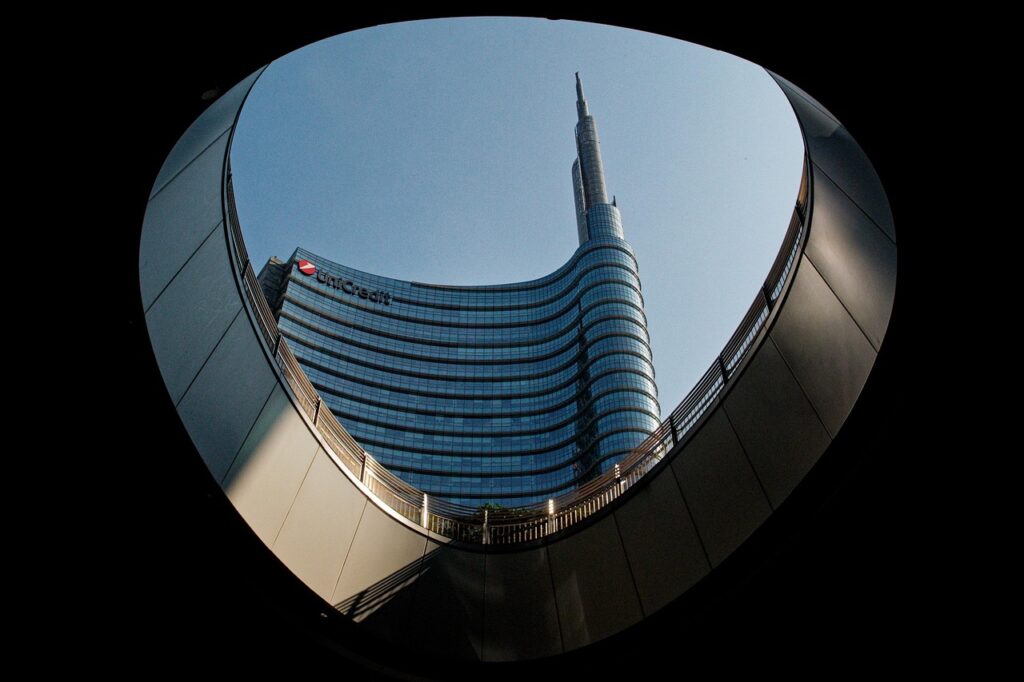
Immersive description: get close to appreciate the scale of the planting: balconies filled with mature trees that shift color with the seasons. On foot, the route around Piazza Gae Aulenti gives you dynamic perspectives between glass façades and pedestrian public spaces. Then head to Piazza Gae Aulenti (Piazza Gae Aulenti, 20154 Milano), an urban plaza opened in 2012 — public address, accessible 24/7. On the square admire the UniCredit Tower, whose slender spire and shimmering glass skin dominate the skyline.
Practical tips: morning light is ideal for photographing the Bosco Verticale’s greenery and the glass reflections. If you want to go up the towers or visit a private interior, check access rules: most residential interiors aren’t open without appointment. For a break, the Biblioteca degli Alberi Milano park (Viale De Gasperi) is just steps away — perfect for a coffee on a bench before you continue walking.
Afternoon: Fondazione Giangiacomo Feltrinelli and Pirelli HangarBicocca — culture within industrial architecture
In the afternoon head to the Fondazione Giangiacomo Feltrinelli (Viale Pasubio 5, 20154 Milano), an iconic home to a library and cultural center designed by Herzog & de Meuron. Address: Viale Pasubio 5, 20154 Milano. Opening hours: often 09:00–19:00 (variable for events); public areas are frequently free to enter, while specific exhibitions may charge (±€5–€10 depending on the show).
Immersive description: the building reads like an urban sculpture: a triangular volume in dark brick, lateral glazed bays and a central atrium that captures the light. Its mixed-use program (library, conference rooms, public events) keeps the place lively and ever-changing. Take time to explore temporary installations and editorial exhibitions: the space is designed to encourage a visual reading of the city.
Nearby, stroll over to the Pirelli HangarBicocca (Via Chiese 2, 20126 Milano), a former factory transformed into a vast contemporary art platform. Address: Via Chiese 2, 20126 Milano. Opening hours: usually Wednesday to Sunday 10:00–19:00; entry is often free for most programs, though major installations may require a ticket (±€0–€10 depending on the exhibition).

Immersive description: HangarBicocca charms with monumental volumes — concrete halls over 15 metres high where contemporary works take on epic scale. The sense of vastness and the slanting late-afternoon light are unforgettable. It’s the ideal place to see how industrial minimalism becomes an artistic stage.
Practical tips: check temporary exhibition times and reserve if needed; many events are less crowded in the evening. Restaurants and cafés nearby (Isola/Tortona areas) offer options for a late lunch or a snack. Both sites are reachable by tram or metro (Garibaldi station for Feltrinelli; stops near Affori/Turro depending on your route to HangarBicocca).
Evening: Triennale Milano and an architectural stroll through Tortona
To wrap up the day head to the Triennale Milano in Parco Sempione (Viale Emilio Alemagna 6, 20121 Milano). Address: Viale Emilio Alemagna 6, 20121 Milano. Fees: temporary exhibitions typically around €10, with some permanent exhibits included. Opening hours: often Tue–Sun 11:00–20:00, with extended evenings on certain days — check the programme online.

Immersive description: the Triennale blends architecture, design and visual arts inside a modernized historic palace. The rooftop offers views over the park and the silhouette of the Castello Sforzesco, letting you appreciate Milan’s classical and contemporary frames. Take advantage of urbanism- and architecture-related exhibits to finish the day with a reflection on the city you’ve been exploring.
After your visit, wander through the Tortona district (Via Tortona) — the epicenter of Fuorisalone and a patchwork of smaller industrial conversions with strong character. Old factories turned into showrooms and studios make for a lively evening stroll, often dotted with pop-up bars and light installations. For dinner, pick a restaurant or bistro in the area to prolong the architectural experience in a convivial atmosphere.
Click here to buy a ticket for the Triennale Milano
Conclusion: one day, a thousand readings of the city
In a single day this route gives you multiple readings of contemporary Milan: the conversion of former industrial sites into cultural venues (Fondazione Prada, Pirelli HangarBicocca), residential and ecological innovation (Bosco Verticale), and the creation of forward-looking public spaces (Piazza Gae Aulenti, Triennale). Each site presents a different strategy — reactive preservation, vegetal insertion, technological transparency — which together paint a portrait of a city in motion.
Final tips: plan your visits around the times listed above and consider booking paid exhibitions online to save time. Get a Navigli/ATM day pass (single-day ticket around €7.50 for public transport, check current rates), stay hydrated and adapt the route to the weather — some places take on very different colors depending on the light. For architectural photography favor the golden hours (early morning and late afternoon) and seek elevated viewpoints (rooftops, public squares) to capture the dialogue between masses.
Finally, leave yourself time to wander: sometimes an unexpected stop in a small square or a refurbished alley reveals surprising details — a modernist entrance, a restored façade, a perfectly placed bench. Contemporary Milan reads in layers; by walking and observing you’ll understand why architects, designers and locals keep treating it as a rich testing ground.