





Introduction
The Navigli district in Milan has long been one of the city’s most atmospheric corners, where water, stone and urban life meet in a mix of everyday charm and understated elegance. Once an essential network of canals built and maintained from the Middle Ages for irrigation, transport and moving building materials (notably for the Duomo), the Navigli have gradually taken on a cultural life: romantic walks, bridges steeped in history, little forgotten churches and lively cafés at twilight. Today the alleys are lined with artisan shops, design galleries and aperitivo bars that draw both locals and travelers, but the soul of the place remains tied to the water and the bridges that cross it.
The Naviglio Grande and the Naviglio Pavese are the two main arteries. The first, older and wider, winds west from the Darsena toward Abbiategrasso and remains the stage for antique markets and the passage of traditional small boats. The second, running more to the south, links Milan with Pavia and bears witness to the industrial and artistic transformations of the 19th century. The bridges spanning these canals — some stone, some metal — tell tales of engineering and urban planning: lock mechanisms, converted railway structures and airy footbridges that offer striking viewpoints over façades and reflections.
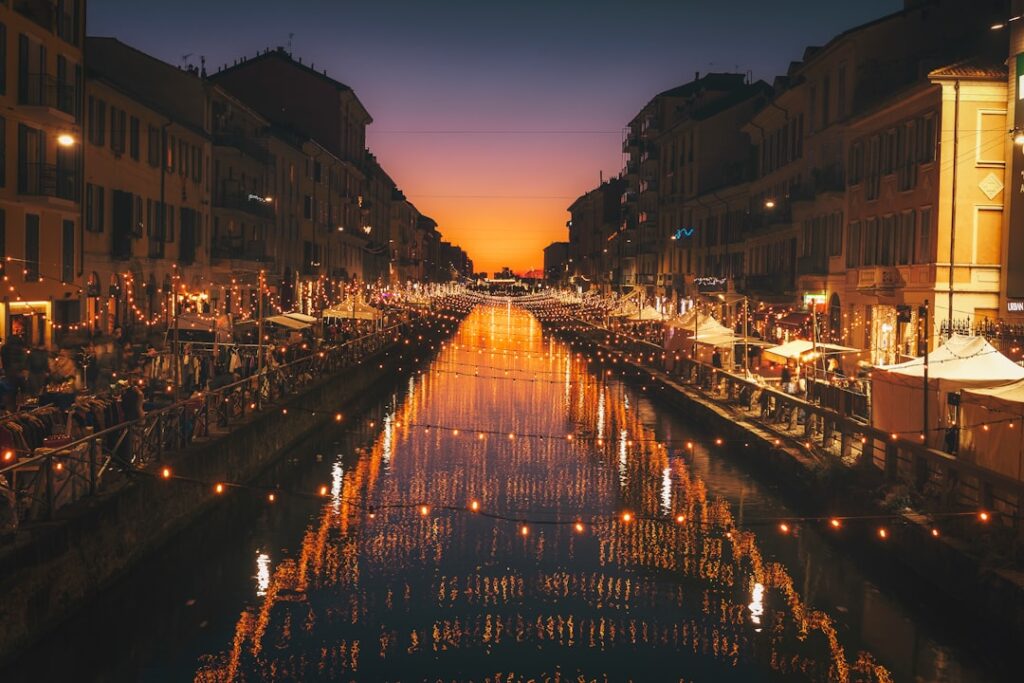
At night, Navigli shows a different face: soft lighting reveals new perspectives, bars serve the iconic « Milanese aperitivo » (drink + buffet) and street musicians bring the quays to life. Strollers flock to the Darsena (the old dock), now redesigned as an urban basin (Porta Ticinese / Alzaia Naviglio Grande) where you can sometimes hop on a short tourist ride or simply admire the play of light on the water. This guide offers a deep dive into the historic bridges and nighttime walks — with addresses, opening times, indicative prices and practical tips to make the most of your Milanese evening along the Navigli.
 Click here to book your ticket for the cathedral and the Duomo terraces

Historic Bridges on the Naviglio Grande: Architecture and Memory
Walking along the Naviglio Grande is like walking through history via its bridges. One of the most iconic is the Passerella ciclopedonale sull’Alzaia del Naviglio Grande (the bike-and-footbridge near Porta Ticinese), which gives a pleasant vantage point to watch boats and old façades. Practical address: Alzaia Naviglio Grande, 20144 Milano MI. The passage is free and open 24/7; it’s a favorite spot for photographers at sunset.

The Chiesa di San Cristoforo sul Naviglio, attached to the canal, is both a place of worship and an architectural landmark: located at Alzaia Naviglio Grande, 16, 20144 Milano MI, it dates back to the 15th century (rebuilt and altered over the centuries). Typical opening hours: visits are usually possible from Tuesday to Sunday, 09:00–12:00 and 15:00–18:00 (closed on Mondays) — check locally; services are free, donations are suggested for guided visits. From the churchyard you get an elevated view over the canal and can clearly see the small locks and the profiles of the stone bridges.
Another structure to note is the Ponte dei Pescatori (a popular name for some of the small fishermen’s footbridges along the Naviglio Grande). They often don’t have a formal address but can be spotted along the Alzaia; these humble bridges reveal the daily relationship between residents and the water. The materials — local stone and metal beams — show layers of repair: 19th-century fixes and modern restorations. Access: free, open day and night.
Practical tips: to photograph arches and their reflections aim for golden hour or blue hour; bring a small tripod for long exposures and respect private zones that border some bridges (homes and restaurants). Bridges can get crowded on summer weekends — plan a weekday stroll if you’re after calm and historical intimacy.
The Darsena and Ponte di via Casale: The Heart of Night Walks
The Darsena, redeveloped in 2015, has become the nighttime hub of the Navigli. Located between Alzaia Naviglio Grande and Piazza XXIV Maggio (Porta Ticinese area), the central basin is flanked by quays with restaurants, clubs and terraces. Practical address: Darsena, Alzaia Naviglio Grande, 20123 Milano MI. Access to the basin is free; the quays usually buzz from around 10:00 until 02:00 depending on each venue.

Nearby, the Ponte di via Casale (a modern pedestrian footbridge linking the Alzaia) offers a clear panorama of the Darsena and the restored façades. This bridge is perfect for watching barges and for getting your bearings before picking an aperitivo spot. Bars and restaurants around the Darsena have varying aperitivo pricing: expect roughly €8–15 for a drink plus buffet, sometimes more (€15–25) in more touristy or themed venues. Evening activity times: aperitivo from 18:00, dinner service until about 01:00–02:00; some clubs stay open later (03:00–04:00 on weekends).

If you prefer an on-water experience, several operators offer short cruises or boat rides on the Naviglio Grande. Indicative prices: about €12–18 per person for a short trip (30–45 min); evening departures from the Darsena are common between 19:00 and 22:00 depending on the season. Embarkation point address: Alzaia Naviglio Grande, pontoon Darsena, 20123 Milano. Note: availability is seasonal and weather-dependent; book online during peak season.
Adjacent Neighborhoods and Themed Walks (Art, Design, Markets)
The Navigli aren’t just about water: the side streets host artists’ studios, design galleries and antique markets. Worth noting: the Mercato dell’Antiquariato del Naviglio Grande (the Naviglio Grande antiques market) traditionally takes place on the last weekend of the month along the Alzaia Naviglio Grande (Ripa di Porta Ticinese area). Address: Alzaia Naviglio Grande, 20144 Milano. Indicative hours: 09:00–18:00; free entry. You’ll find furniture, art objects, vinyl records and vintage jewelry — perfect for wandering before evening aperitivo.
For design lovers, the Navigli Design District clusters showrooms and galleries (multiple addresses along Via Tortona and nearby streets). During Milan Design Week (Fuorisalone) these streets light up with installations and nighttime exhibits that stretch the neighborhood’s life late into the night. Pro tip: look out for small galleries on Via Conchetta and Via S. Cristoforo; they’re often open 10:00–19:00, with late openings during special events.
Practical tips for exploring: walk between the Darsena and Porta Ticinese along the Alzaia, then stray from the canal to discover studios on Via Marco d’Oggiono, Via Corsico and Via Conchetta. Bring comfortable shoes: cobblestones, steps and small slopes make the stroll winding but charming. If you buy furniture or art pieces, check dimensions and delivery options — many sellers offer paid delivery services.
Click here to visit the Triennale Milano and its exhibitions
Night Atmosphere: Music, Food and Safety
At night, the Navigli blend live music, animated conversations and tempting food aromas. For a typical evening, start with an aperitivo at a bar along the Alzaia (average price €8–15), follow with dinner in an osteria or pizzeria (main courses €10–22 depending on choice) and finish with a drink on a terrace. A few notable spots: Osteria del Binari (Via Tortona / near the Naviglio — confirm exact address locally), canal-side restaurants and small taverns often open 12:00–15:00 and 19:00–23:00.

Music and concerts: many bars host jazz or folk nights. Look for clubs and cafés advertising « live music » in local listings. Entry costs vary: free entry with a required purchase, starting around €0–10, and sometimes higher if it’s a ticketed concert (€12–25).
Safety and good practice: Navigli is generally safe at night, but it’s wise to stick to the lively quays and avoid deserted alleys after 02:00. Keep your belongings close, avoid holding your phone out for long photo sessions and favor taxis or ride-hailing services for late returns (a typical fare back to central Milan: €8–20 depending on distance and time). Public transport (tram and metro) runs on variable schedules: tram lines 2 and 9 stop along the Alzaia; metro M2 (Porta Genova) is the main stop for reaching the Navigli (Porta Genova FS, Piazza XXV Aprile).

Local Practical Tips: When to Go, What to Wear, and How to Save
Best time to visit: April to October offers the most pleasant temperatures for riverside walks; summer is lively but busy. Spring and autumn evenings combine mild weather and golden light — ideal for photography. Avoid rainy days if you want to enjoy the terraces.
Recommended gear: comfortable shoes, a light jacket for evenings (waterfronts get cooler at night), a portable phone charger (plenty of night scenes to capture), and a small flashlight or judicious flash use to preserve the atmosphere.
- Typical budget: aperitivo €8–15; dinner €15–30; short boat trip €12–18; late taxi €8–20.
- Transport: Metro M2 (Porta Genova) — station address: Piazza Cardinale Federico 1, 20154 Milano MI (Porta Genova FS) ; Tram 2 and 9 stop along the Alzaia.
- Safety: stick to well-lit quays, avoid leaving bags open, use electronic payment options to limit cash on hand.
Useful Resources and Contacts
To plan your visit, two handy resources are the Porta Ticinese / Darsena tourist information point (check seasonal location) and the official sites for events like Milan Design Week and local markets. Book restaurants and cruises online during high season. In an emergency call 112 (European emergency number). For a deeper cultural visit, look into themed guided tours (architecture, food, canal history) offered by local agencies — prices range €15–30 per person depending on duration (2–3 hours).
Click here to discover Milan essentials with a self-guided tour

Conclusion
Milan’s Navigli offer an urban experience that blends history, architecture and modern life: from the historic bridges of the Naviglio Grande to the lively quays of the Darsena, every corner tells a different story. By day you’ll linger over stones, arches and artisan workshops; by night the neighborhood turns into a stage of light where aperitivo, live music and terrace chatter paint a friendly, creative Milan. The addresses mentioned — Alzaia Naviglio Grande, Chiesa di San Cristoforo sul Naviglio (Alzaia Naviglio Grande, 16, 20144 Milano MI), Darsena (Alzaia Naviglio Grande, 20123 Milano MI) and the embarkation points along the basin — are practical anchors for planning your walks.
When you head to the Navigli, remember to check updated opening times and prices (the figures in this text are indicative), stick to lively areas at night and enjoy the small local experiences: an antiques market on a Sunday morning, a sunset cruise, or simply a shared drink on a bridge. Those little moments, repeated along the canals, make up the district’s soul and leave lasting visual memories: a façade mirrored in the water, the soft splash of a boat, the glow of a lamp over an old arch.
Finally, let yourself be led by the moment — sometimes the best discovery is the alley that wasn’t on your map, the tiny bistro serving homemade risotto at a fair price, or the anonymous bridge whose view of the canal takes your breath away. Navigli is a place to be lived as much as it is to be visited: respect it, take your time and come back at different hours to uncover all its shades.
