





Introduction — Getting around Milan quickly: why local tips make all the difference
Milan is more than Italy’s business and fashion capital: it’s a compact, fast-paced city where efficient travel can make the difference between a great day and a frustrating one. From the soaring Duomo di Milano to the lively canals of the Navigli, from the elegant arcades of the Galleria Vittorio Emanuele II to the museums at Castello Sforzesco, knowing how to move quickly lets you see more without wasting time. Time-pressed travelers — whether on a business layover, a fashion weekend or a short sightseeing trip — will benefit from local tricks: which tickets and passes to buy, alternate routes, off-peak windows, and the best spots to drop a suitcase in minutes.
In this post I’ve gathered practical advice from Milanese locals and frequent visitors. You’ll find concrete details: full station names, exact addresses, prices in euros, opening hours and recommendations for getting the most out of each transport option — metro, tram, suburban trains, the Malpensa Express, taxis and shared mobility (bike sharing, electric scooters). I also include on-the-ground tips: which tram lines to pick for a fast scenic ride, which Duomo entrances to avoid at rush hour, where to grab an electric scooter when it’s raining, and how to reach Malpensa Airport while skipping the busiest morning traffic.
I haven’t forgotten precise landmarks to help you orient yourself: station and attraction addresses, typical opening times (and when these often change), indicative fares to budget for, plus safety and comfort tips for night travel. This information is meant to be immediately usable: you’ll know where to buy a 90-minute ATM ticket (valid for metro, bus and tram), why the Malpensa Express is often the fastest choice (and where to catch it at the airport), or how to combine a historic tram and the metro to reach the Navigli quickly after a downtown meeting.
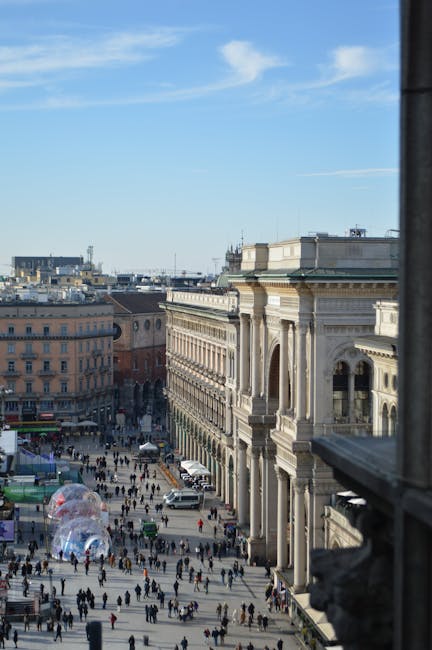
To make the guide more visual, I’ve suggested images (free stock options) illustrating key stages of getting around Milan: the Duomo at sunrise, Piazza Gae Aulenti at night, a Naviglio bridge at sunset, or an M1 metro train during off-peak hours. These references help you recognize places on the ground and picture the tips in action. Plan your route: whether you’re in town for 24 hours or a week, this guide will help you save time, cut costs, and get the most out of Milan.
 Click here to book your ticket for the cathedral and rooftop terraces

Metro and tram: streamline your trips through the city center
The ATM (Azienda Trasporti Milanesi) public transit network is the backbone of getting around central Milan quickly. The metro has four main lines: M1 (red), M2 (green), M3 (yellow) and M5 (lilac). General hours: roughly 06:00–00:30 Sunday to Thursday, extending to about 02:00 on Friday and Saturday (times can change for special events). Key stations to memorize: Duomo (Piazza del Duomo, 20122 Milano) for the historic center, Cadorna FN (Piazza Luigi Cadorna, 20123 Milano) for Trenord/Malpensa Express connections, and Centrale FS (Piazza Duca d’Aosta, 20124 Milano) for regional and long-distance trains.
Fares: a standard single ticket (Biglietto ordinario) costs €2.20 and is valid for 90 minutes with unlimited metro, tram and bus changes within the urban zone. If you plan multiple trips in a day, get a giornaliero (daily ticket) for €7.00 (24-hour validity), a 48-hour ticket for €12.00 or a 72-hour ticket for €18.00. For longer stays, look into weekly passes. Where to buy: station vending machines, the ATM Milano Official app and Tabacchi shops.
Time-saving tips: favor the M3 line to cross the city quickly north–south (handy from Duomo to Centrale FS). If you’re near the south bank of the Naviglio, take a tram instead of a bus: trams often move faster through the center and give a direct, scenic ride. For example, the historic tram number 2 links Piazzale Negrelli to Via Francesco Petrarca and passes the Navigli area — a great way to reach the neighborhood without switching metros.
Other local tips:
- Always validate your ticket: whether paper or a QR code, you must validate it; inspectors fine frequently. Fines are much higher than a ticket.
- Avoid rush hour: between 08:00–09:30 and 17:30–19:00 trains get crowded; if you can, schedule visits for early morning or late afternoon.
- Use secondary exits: big stations like Duomo have multiple exits; pick the one closest to your destination (shown on signs and apps) to save 5–10 minutes of walking.
- Plan via the ATM app: it shows real-time connections and network disruptions.

Stations, airports and fast trains: get into the city without wasting hours
Milan has an extensive rail and air network. Knowing the main stations and express lines will save you costly delays. Main arrival points are:
- Milano Centrale (Stazione Milano Centrale) — Address: Piazza Duca d’Aosta, 1, 20124 Milano. The station is open 24/7; you’ll find customer services, luggage storage and connections to all national and international lines. If you’re in a hurry, note that access to high-speed platforms like Frecciarossa often opens 10–20 minutes before departure and security checks can lengthen boarding times.
- Stazione Milano Cadorna (Milano Cadorna) — Address: Piazza Luigi Cadorna, 20123 Milano. A handy interchange for the center and the Malpensa Express terminus (some Malpensa trains arrive here). Close to Castello Sforzesco (10–15 minutes on foot).
Fast airport routes:
- Malpensa Express — Connects Milano Malpensa Airport (MXP) with two city termini: Milano Cadorna and Milano Centrale. Price: about €13.00 for a one-way second-class ticket. Duration: 40–50 minutes depending on terminus. Service runs regularly from around 05:00 until midnight (check Trenord or Malpensa Express for exact times). Tip: buy your ticket online or at Trenord machines in the airport to save time; trains run every 20–30 minutes.
- Shuttle buses (Terravision / Autostradale / Malpensa Shuttle) — €8–€10 when booked in advance. Journey to Milano Centrale takes about 50–60 minutes depending on traffic.
- Linate Airport — Closer to the center (Aeroporto di Milano-Linate, Piazza Forlanini, 1, 20132 Milano). Urban bus 73 (ATM) links Linate to Piazza San Babila: standard ATM ticket €2.20. Duration: 25–30 minutes off-peak. From Linate, expect taxis into the city around €15–€20 depending on destination.
Practical tips:
- If you’re short on time and arriving at Malpensa, favor the Malpensa Express to Milano Cadorna if your destination is the historic center (fewer metro changes to reach Duomo and Castello Sforzesco).
- To reach Milano Centrale from Malpensa, take the Malpensa Express direct to Centrale — ideal if you have a national train to catch next.
- Luggage lockers at Milano Centrale are inside the station; prices vary by size and duration (e.g. €6–€8 for a few hours, €10–€15 for 24 hours — check on site).
- When a transport strike is announced, prefer taxis or pre-booked ride-hailing services; always leave a comfortable buffer before any professional commitment.
Soft mobility and shared rides: bikes, scooters and mopeds to shave off minutes
For the last mile through Milan’s narrow streets, shared mobility options are invaluable. Bike-sharing services (BikeMi and private providers), electric scooters (Dott, Lime) and electric mopeds (Helbiz, Lime Scooter when available) let you cross neighborhoods without waiting for a bus or taxi. Here are practical details and tips to use them efficiently.
Indicative fares:
- Electric scooters (Dott, Lime) — Unlock fee: about €1.00; then ~€0.25–€0.30 per minute. How it works: download the app, register a card, find a nearby device on the in-app map, scan the QR code and go. Tip: use scooters for short 10–15 minute hops when bus stops are out of the way.
- Bike-sharing (BikeMi and dockless bikes) — Pricing varies; often the first half hour is covered by a daily pass or light subscription, then charged by the minute. Typical prices: daily pass €3–€5, then €0.20–€0.50 per 10 minutes depending on the service. E-bikes make climbs (e.g. up to Gae Aulenti) effortless.
- Electric mopeds — Similar pricing to scooters: €1.00 unlock + per-minute charges; some scooters add a €0.10–€0.20/km fee. Prefer mopeds in bad weather if they offer a larger protective shield.
Rules and best practices:
- Responsible parking: leave scooters and bikes in designated areas (lamp posts, bike racks) to avoid fines and blocking sidewalks. Penalties for obstructive parking can be steep and the operator may charge reconditioning fees.
- Helmet use: strongly recommended; some operators provide helmets but availability is limited. Helmets significantly reduce risk on busy roads.
- Stick to bike lanes: Milan has expanded many cycle paths, especially around the Navigli, Porta Genova and Corso Sempione. Follow signage and avoid riding on sidewalks.
- Be cautious at night: stick to well-lit streets on scooters and avoid quiet back alleys. For late-night trips, a taxi or VTC may be safer.
Local hacks:
- If you’re in a hurry and the weather is good, combine metro + scooter: get off one stop before your destination to avoid pedestrian congestion and take the “last kilometer” on a scooter.
- To reach the Navigli from the Duomo, a bike is often faster (8–12 minutes depending on pace) than a tram in the evening when traffic is slowed by busy bars.
- Allow a few extra minutes to find and unlock a scooter during peak demand (Friday/Saturday nights): check battery level in the app before you start.

Taxis, ride-hailing and tips for late-night or urgent trips
When speed matters — a meeting overruns, a tight connection, heavy luggage or a late-night move — taxis and ride-hailing services are often the best option. Here’s what you need to know to use them efficiently and avoid surprises.
Official taxis:
- Where and how: Official taxis are easy to spot by the roof light and the “TAXI” sign. Main taxi ranks: Piazza Duomo (Piazza del Duomo, 20122 Milano), Stazione Centrale (Piazza Duca d’Aosta, 1, 20124 Milano) and Largo Cairoli near Castello Sforzesco. You can hail taxis in the street only when the light shows they’re available; otherwise use a taxi rank or call a dispatcher.
- Typical fares: Base fare around €3.50; roughly €1.10 per km; night surcharges apply (00:00–06:00), plus fees for luggage, pre-booking or airport trips. Fixed fares may apply to Malpensa or Linate depending on the company; expect €90–€120 for a long ride to Malpensa depending on time and traffic (check official rates before you go).
Ride-hailing services:
- Uber — Operates as a premium option (Uber Black) with higher prices; good for comfortable, reliable rides if you don’t mind the extra cost.
- Free Now and local apps — Book via app, get a price estimate and pay cashless; local apps often run promotions off-peak.
Night and urgent-trip tips:
- Allow extra time: taxi travel times can double in heavy traffic (mornings and late afternoons) — leave 30–45 minutes extra before a train or flight.
- Use official ranks: near stations and tourist spots, take a taxi from the rank rather than hailing in the street to avoid refusals or dodgy fares.
- Have the exact address ready: give the full address (e.g. “Via Santa Radegonda 16, 20121 Milano” for Luini) and, if possible, show it on a map app to avoid detours.
- Tips: not required, but rounding up the fare is common for small favors (help with bags, etc.).

Practical routes to save time — concrete examples
Below are tested, practical routes to optimize your time in Milan. Each suggestion includes place names, addresses, estimated times and prices to help you plan.
1) Duomo di Milano (Piazza del Duomo, 20122 Milano) → Navigli (Ripa di Porta Ticinese):
- Quick option: Metro M1 (Duomo) toward Rho Fiera, get off at Conciliazione (2 stops), then take tram 3 or walk 12–15 minutes to the Navigli. Estimated time: 20–25 minutes. Cost: ATM ticket €2.20.
- Scenic option: Tram 14 or 2 from Duomo (via Galleria) for a scenic ride along Corso Venezia down to the south. Estimated time: 30–40 minutes depending on traffic; perfect in the late afternoon.
2) Milano Centrale (Piazza Duca d’Aosta, 1, 20124 Milano) → Castello Sforzesco (Piazza Castello, 20121 Milano):
- Metro M3 (Centrale FS) toward Comasina, get off at Duomo then walk 6–10 minutes or change to M1 one stop to Cairoli. Estimated time: 15–20 minutes. Cost: ticket €2.20.
- Taxi: 10–15 minutes depending on traffic, about €10–€15.
3) Malpensa Airport (Aeroporto di Milano-Malpensa) → Milano Cadorna:
- Malpensa Express direct: €13.00, 40–50 minutes, trains every 20–30 minutes. Station at Malpensa: Terminal 1, Arrivals level.
- In an emergency (delayed flight): shuttle bus to Centrale then taxi or metro to inner-city destinations; allow 60–90 minutes.
Click here to buy your ticket for Sforza Castle with audio guide
Final tips before you go
Print or download major tickets (Malpensa Express, museum entries) and keep an offline map app handy. Respect opening hours (see sections above), validate your tickets and travel light during peak times. Finally, adapt your choices to the weather: bike or scooter on sunny days, taxi for rain or late-night transfers to stay comfortable and safe.
Conclusion — Mastering mobility in Milan to make the most of your time
Milan becomes especially accessible once you know the right shortcuts: the ATM network lets you cross the center quickly by metro and tram; express trains link airports in reasonable time; and shared mobility provides flexible last-mile solutions. By combining these options — for example, Malpensa Express to Cadorna then a scooter to a hotel in the Navigli, or metro + bike to travel between meetings — you turn long transfers into extra minutes for exploring.
The addresses and details above (Piazza del Duomo, Piazza Duca d’Aosta 1, Piazza Luigi Cadorna, Ripa di Porta Ticinese, Piazza Castello) are practical waypoints. The fares mentioned (ATM ticket €2.20, Malpensa Express ~€13.00, daily tickets €7.00) are useful budgeting references; check official updates before you travel. General hours (metro 06:00–00:30, early train services until around midnight depending on destination) will help you schedule airport and station transfers.
Finally, adopt local habits: validate your ticket, park scooters and bikes in designated areas, use official taxi ranks when you’re in a rush, and favor local apps for real-time info. These small routines will save you time, avoid unpleasant surprises and let you experience Milan like a true local — moving from the Duomo to the Galleria shops in a perfectly optimized day.