





INTRODUCTION
Milan is no longer just Italy’s capital of fashion and commerce: it’s a living urban laboratory where architects and landscape designers constantly push the boundaries of what’s possible. Over the past decades the city has undergone a deep transformation driven by international firms and local talents who are redefining whole neighborhoods, rehabilitating industrial wastelands and rethinking the relationship between buildings and public space. These interventions blend contemporary aesthetics, environmental sustainability and practical urbanism — the result is a city that honors its heritage while looking firmly to the future.
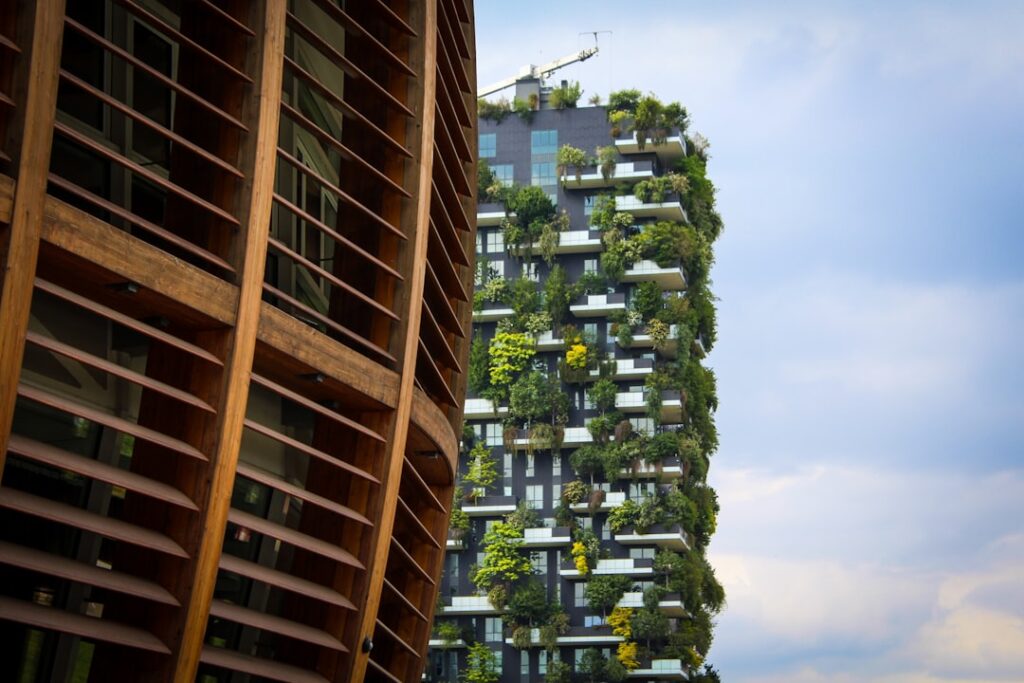
Recent projects — from Stefano Boeri’s Bosco Verticale to the mixed-use CityLife complex with towers by Zaha Hadid, Arata Isozaki and Daniel Libeskind — have given Milan fresh silhouettes and new ways to use the city. But beyond slogans, it’s the concrete details that reveal the impact of these changes: façades that respond to the microclimate, green roofs, reuse of materials from disused factories, street furniture designed for all ages. The architects working in Milan today aren’t just erecting buildings; they’re crafting living frameworks — promenades, micro-landscapes and everyday places where life becomes comfortable, safe and beautiful.
In this article we’ll explore several sides of this architectural revival: the firms and architects shaping the city, the landmark projects open to the public, the conversion of industrial sites and the sustainable approach guiding contemporary Milanese urbanism. For each location we provide exact addresses, opening hours where applicable, admission details and practical tips for a successful visit. Whether you’re a curious traveler, an architecture student or a industry professional, this piece aims to immerse you in today’s Milan — a city under continuous construction, where every corner tells a story of innovation, urban strategy and the meeting of tradition and avant-garde.

The firms and architects shaping Milan today
Milan has long attracted international names while nurturing a generation of homegrown practices. Among the most visible figures are Stefano Boeri Architetti, creator of the Bosco Verticale concept; Zaha Hadid Architects, responsible for elements of the CityLife district; Arata Isozaki and Daniel Libeskind, each behind a tower in the same area; and Herzog & de Meuron, who transformed the Fondazione Prada, with Dutch firm OMA and Rem Koolhaas also contributing to other urban projects. These firms do more than craft volumes: they question architecture’s social role by working on mix-use programs, accessibility and the relationship with landscape.
Stefano Boeri Architetti (Via della Moscova 9, Milan) popularized the idea of « urban forestry » in Milan with the Bosco Verticale (Via Federico Confalonieri, 11, 20124 Milano). The towers host roughly 900 trees and thousands of shrubs on their balconies, improving air quality and thermal insulation. Zaha Hadid Architects introduced a fluid signature to commercial surfaces and public spaces in projects where pedestrian circulation is staged. Daniel Libeskind gave an expressive verticality to his CityLife tower (Piazza Tre Torri, 20145 Milano).
Among Milan-based firms, Lombardini22 (Via San Raffaele 8, Milano) works on mixed programs combining offices, housing and public facilities, while Cino Zucchi Architetti carries out sensitive interventions on historic buildings and restorations. Collaborations between local and international teams are common: for example, the regeneration of the former Ansaldo area brought together multidisciplinary teams of urban planners, ecologists and sociologists to ensure durable, context-appropriate results.
Practical tip: to follow these studios’ work, check temporary exhibitions at the Triennale di Milano (Viale Emilio Alemagna, 6, 20121 Milano), usually open Wednesday to Monday 10:30–20:30 (closed Tuesdays). Admission varies by exhibition but typically ranges around €10–15 for a major show. The Triennale also runs talks and guided tours that are invaluable for understanding the architects’ intentions.
 Click here to book your ticket for the Triennale Milano

Flagship projects and redevelopments: CityLife, Porta Nuova, Fondazione Prada
Three areas embody the new Milan: CityLife, Porta Nuova and the Fondazione Prada. Each demonstrates a different approach to the post-industrial city — CityLife relies on the power of towers and contemporary public space; Porta Nuova reinvents a business district with mixed uses and urban promenades; Fondazione Prada converts industry into an international cultural destination.
CityLife — Piazza Tre Torri, 20145 Milano — is a large-scale project where retail, residences and parkland coexist. The three towers — Torre Generali (Daniel Libeskind), Torre Allianz (Arata Isozaki) and Zaha Hadid’s curved tower — frame a public park of 170,000 m². The CityLife Shopping District (Via Blaise Pascal, 20145 Milano) is generally open 10:00–21:00; hours vary by store. Access to the park is free: stroll the Parco di CityLife paths to appreciate the contrast of glass, steel and lawns. Paid parking rates vary (expect around €2–3 per hour depending on location).
Porta Nuova — centered on Piazza Gae Aulenti (20154 Milano) and Via Melchiorre Gioia — is the showcase of urban regeneration. The immediate landmark is Piazza Gae Aulenti with the UniCredit Tower (Piazza Gae Aulenti, 3). The piazza is a public space open 24/7 and offers striking views at dusk when the fountains light up. Take the M2 metro to Garibaldi FS or Gioia (M2) to reach the area. The district is dotted with restaurants and cafés; budget about €15–30 for a meal at a local bistro around the square.
Fondazione Prada, Largo Isarco, 2, 20139 Milano, is a notable example of how a cultural campus can anchor urban transformation. Housed in a former distillery, the Fondazione combines contemporary pavilions with restored industrial structures. Hours: typically open Wednesday to Monday 10:00–19:00 (closed Tuesdays); check the website for special exhibitions or evening events. Prices: standard ticket around €15, reduced €12 (students, seniors); some temporary shows or events may have different fees. The campus includes the Tower (panoramic viewpoint), the Cinema Hall and cafés/shops, offering a full experience of architecture, art and convivial breaks.
Click here to book your ticket for Fondazione Prada

Redeveloping industrial wastelands and transforming urban fabric
Milan’s industrial past runs deep, and many neighborhoods are being reborn through the conversion of brownfields. Via Tortona, the former Ansaldo area (Via Bergognone) and the old docks around the Navigli show how factories and workshops can be turned into mixed-use places: creative studios, galleries, design showrooms and housing. The result is a denser, more welcoming urban fabric that’s energizing for culture and the creative economy.
Via Tortona (the design district) is today a creative hub; during the Salone del Mobile in April the street fills with installations and showrooms. For daytime exploration head to Via Tortona 27 and the surrounding streets: galleries and studios are usually open 10:00–18:00, but many close on Sundays. Access to showrooms can be free or by invitation depending on the event.

The former Ansaldo area (Via Bergognone, 20144 Milano) underwent a major rehabilitation plan combining social housing, green spaces and artisan workshops. Interventions aim to preserve striking industrial elements — brickwork, steel frameworks — while adapting them to new uses. These projects often involve public-private partnerships and strong municipal engagement to ensure social mix and nearby services (schools, sports centers, shops). Site visits are sometimes possible but check access in advance; parts of these zones may still be private or under construction.
Practical tips: favor cycling (BikeMi or other bike-share services) to move between these neighborhoods — many of the transformations are best appreciated at slow speed; routes between Navigli, Tortona and Porta Genova are perfect for coffee stops (budget: €2–4 for an espresso) and gallery hopping. Wear comfortable shoes: many converted factories retain uneven floors and industrial staircases that deserve careful footing.
Sustainable urbanism: parks, mobility and climate resilience
One defining feature of recent interventions in Milan is the strong emphasis on sustainability. City policies promote green roofs, rainwater harvesting systems, urban planting and energy projects to reduce buildings’ carbon footprints. New and upgraded parks — like Parco di CityLife and the redevelopment along Corso Como — are not mere green postcards: they function as ecosystem infrastructure that filters air, manages water and provide cool islands during heatwaves.
Parco di CityLife (entrances around Piazza Tre Torri, 20145 Milano) is open to the public every day; hours are flexible, but the park is most pleasant early morning or late afternoon. The park offers playgrounds, sports areas and walking paths; it’s stroller- and wheelchair-friendly. On mobility, Milan is expanding continuous cycle lanes and reinforcing tram and metro use: the Milano Pass or ATM ticket cards are handy for visitors — a single ticket (90 min) costs €2.20, 24-hour around €7 (indicative rates, check atm.it).
Additionally, private initiatives often led by architecture firms are testing nearly zero-energy building concepts (NZEB). Architects incorporate photovoltaic panels, geothermal systems and heat pumps to cut operational energy use. For visitors this means interiors that stay cooler in summer and better insulated in winter, and the chance to see — for example on guided tours — the technical installations behind these performances.
Practical advice for eco-conscious travelers: choose accommodation with green certifications or B&Bs that demonstrate sustainable energy management; prefer trains for interregional trips to Milan (Milano Centrale station, Piazza Duca d’Aosta, 1). To discover the city from another angle, book an architecture walking tour (2–3 hours) with local operators: typical prices range €15–30 per person depending on format and guide.
Click here to book your self-guided tour of Milan
CONCLUSION
Today’s Milan is an ongoing story written by renowned international firms and attentive local architects. Recent interventions — CityLife, Porta Nuova, Fondazione Prada and the rehabilitation of industrial sites — demonstrate how architecture can be a powerful tool for social and environmental transformation. Each project answers specific needs: controlled densification, creation of welcoming public spaces, reduced ecological footprint and preservation of significant heritage elements.
For the visitor, the city reads at many scales: from a stroll across a modern square like Piazza Gae Aulenti (Piazza Gae Aulenti, 20154 Milano) to admiring the planted balconies of the Bosco Verticale (Via Federico Confalonieri, 11, 20124 Milano). The addresses listed in this article let you build a coherent itinerary: start in the Garibaldi/Porta Nuova area in the early morning, cross CityLife and finish with a late-afternoon visit to Fondazione Prada when the light enriches materials and nearby cafés offer a well-earned break.
Finally, don’t forget the practical details: hours and prices can change (Fondazione Prada, Largo Isarco 2, tickets around €15, usually open 10:00–19:00, closed Tuesdays), favor public transport (single ticket €2.20) and book certain guided visits in advance. Milan is a city to be discovered both with your eyes and your curiosity: take the time to step into a gallery, climb a terrace or simply sit in a park and watch the city in motion. You’ll leave not only with images of striking silhouettes, but with a deeper understanding of how the city is being rebuilt — sustainable, open and crafted by today’s architects.
Click here to book your ticket for the Duomo and rooftop terraces
