


Introduction — Why Milan Attracts Global Architecture Projects
Milan is more than Italy’s capital of fashion and design; it’s an urban laboratory where historic heritage meets contemporary innovation. From the Duomo to the skyscrapers of Porta Nuova, the city draws architects, developers and investors from around the world who see fertile ground for ambitious projects. This momentum stems from a mix of factors: a strong economic fabric (banking, industry, creative sectors), influential cultural institutions like the Triennale Milano and Fondazione Prada, brownfield sites ripe for redevelopment, and a city population hungry for high-quality public spaces. The result: Milan has become a showcase for architectural experimentation where the contemporary engages in dialogue with the historic.
Contenu de l'article
Milan’s appeal also lies in its ability to introduce the new without erasing the past. The restoration and adaptive reuse of industrial buildings — converted into museums, galleries, cultural centers and coworking spaces — generate projects that attract international attention. The regeneration of the Isola district and the residential towers of Bosco Verticale (Via Federico Confalonieri 11, 20124 Milano) show how modern architecture can address urban challenges: density, quality of life and biodiversity. These achievements demonstrate that clients and local authorities are willing to back projects that deliver social and environmental added value.
Institutionally, Milan offers a favorable environment for international projects thanks to administrative procedures that can be more flexible than elsewhere in Italy, occasional tax incentives and a strong culture of public-private partnership. Fairs and exhibitions — Salone del Mobile, Milano Design Week, the Triennale’s Biennale Architettura — attract global players every year who come to present, test and finance architectural ideas. The city thus acts as a « showroom »: an ambitious project can be seen, critiqued and influenced by an international audience, creating a virtuous circle that draws further investment.
Finally, Milan’s geographic position — a crossroads between Northern and Southern Europe, close to Switzerland and Austria — makes it easy for international architecture firms and foreign talent to set up shop. Universities and design schools, notably the Politecnico di Milano (Piazza Leonardo da Vinci 32, 20133 Milano), feed the professional pipeline. In short, Milan attracts international architectural projects because it combines economic opportunities, cultural infrastructure, political will and an urban aesthetic that values conversation between old and new. This feature looks at how these forces play out concretely across emblematic sites, transforming neighborhoods and public-private initiatives.
Duomo, Galleria Vittorio Emanuele II and the Historic Legacy as a Design Foundation
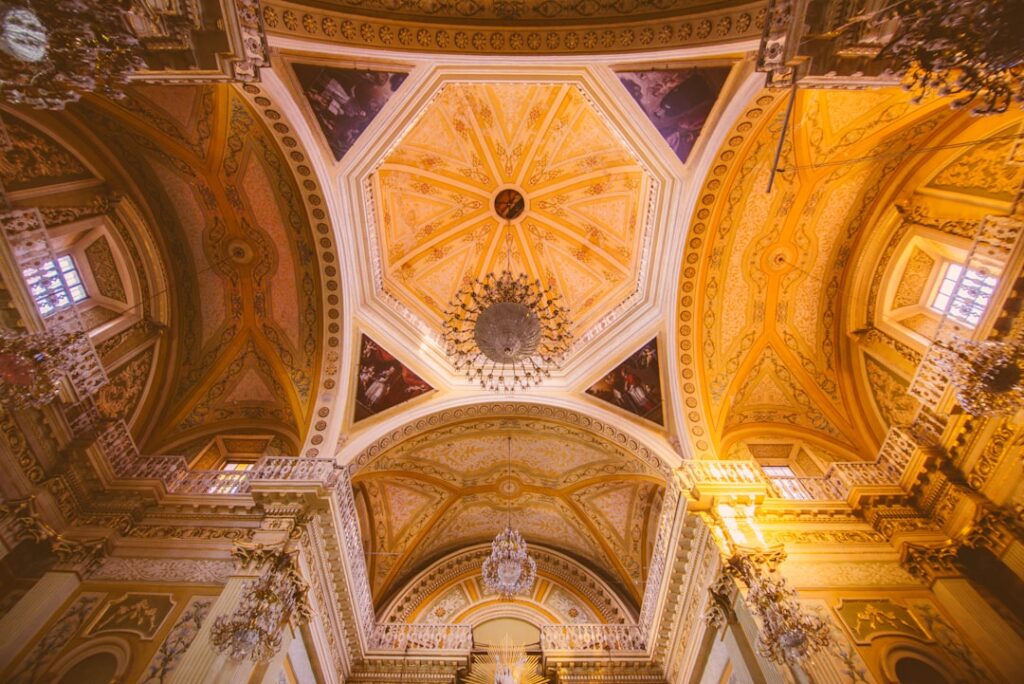
Il Duomo di Milano (Piazza del Duomo, 20122 Milano) and the Galleria Vittorio Emanuele II (Piazza del Duomo) are more than monuments: they form a spatial and cultural matrix that shapes every architectural proposal. The Duomo, a gothic masterpiece, today offers public-access terraces (terrace entry: about €12 to €18 depending on lift or stairs; cathedral access: about €3 to €6 for non-religious visitors). Opening hours: the cathedral is generally open from 07:00 to 19:00, terraces from 09:00 to 19:00 depending on the season — check the official site for current hours and exceptional closures.
The Galleria Vittorio Emanuele II, with its glass roof and floor mosaics, is a model of blending commerce and public space. Architectural interventions in Milan need to respect this heritage: any project in the central zones demands special attention to sightlines, alignments and the materials used. Tourist appeal also draws investors keen to open luxury stores and high-end restaurants — which impacts ground-floor rents and the transformation of commercial street fronts.
Practical tips: book Duomo visits in advance, especially in high season; arriving early in the morning helps avoid the crowds. To photograph the Galleria, aim for early hours (before 10:00) or evening after 20:00 for softer light and fewer people. For professionals, the area around the Duomo is served by Duomo metro station (M1, M3). Nearby: Museo del Novecento (Piazza del Duomo 8, 20122 Milano) — entry varies around €5 to €10, typically open from 09:30 to 19:30.
 Click here to book your Duomo and terrace tickets
Porta Nuova, Piazza Gae Aulenti and the Business District’s Rebirth
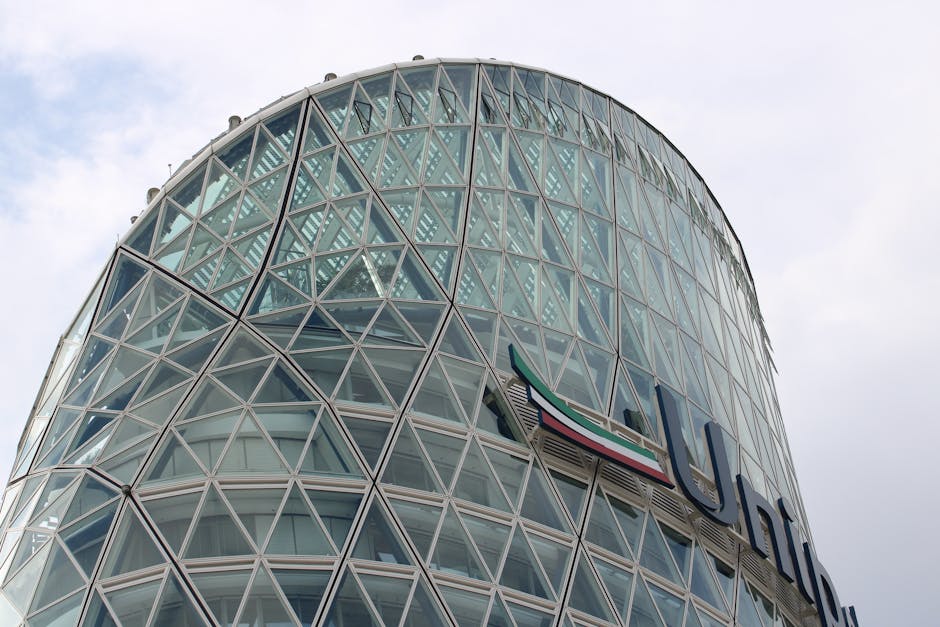
The Porta Nuova project, centered on Piazza Gae Aulenti (20154 Milano), is one of Milan’s most successful urban regeneration stories. The district mixes office towers (like the UniCredit Tower, Piazza Gae Aulenti 1), public spaces and modern residences. Excellent transport links are a plus: Garibaldi FS station (M2, M5) connects the area to the rest of the city and the central train station. The glass façades of Porta Nuova’s towers play with light and the urban skyline; this aesthetic attracts international investors looking for a modern image.
Piazza Gae Aulenti is a pedestrian public square ringed with restaurants and shops. The landscape design — pools, lighting and benches — was crafted to encourage neighborhood life and attract events and temporary art installations. International architectural projects appreciate Porta Nuova’s ability to generate foot traffic and media visibility: a well-placed building here gains a recognized European address.
Practical tips: for unobstructed views, visit the square at sunset or take the elevator to the UniCredit Tower observation terrace (public access varies, check for events); many cafés and restaurants around Piazza Gae Aulenti stay open late. For visitors: public transport options include tram 12, city buses or Garibaldi FS station; parking is limited so favor private car parks (rates vary, often around €2–€4/hour in covered facilities).
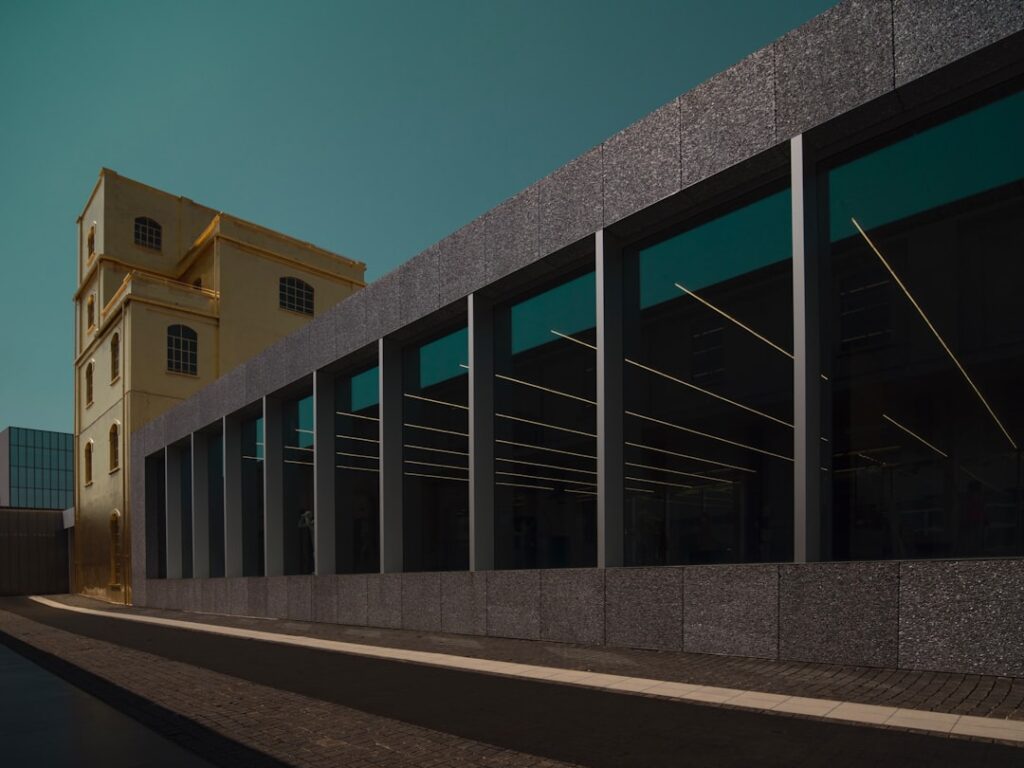
Fondazione Prada, HangarBicocca and Industrial Conversions
Milan particularly attracts international projects through its talent for turning industrial wastelands into leading cultural institutions. Fondazione Prada (Largo Isarco 2, 20139 Milano) is one of the most emblematic examples: a contemporary site created by the Prada association with exhibition spaces, an experimental tower and a bar-restaurant. Address and visiting info: Largo Isarco 2; exhibition entry typically ranges between €10 and €15. Typical opening days: Thursday to Monday, 11:00–19:00 (closed Tuesday–Wednesday) — check the program for late events.
Likewise, HangarBicocca (Via Chiese 2, 20126 Milano) converted an industrial warehouse into a vast exhibition hall for contemporary installations. Entry is often free, or reduced for special shows; opening hours are generally 10:00–19:00, closed on Mondays. These venues attract not only a broad cultural public but also architects and developers who see models of conversion: large volumes, zenithal light and flexible use.
For travelers interested in these urban shifts, plan a half-day combo: start at Fondazione Prada in the morning (reach by metro or taxi), then head to HangarBicocca in the afternoon. Tip: some events or exhibitions require booking; check official sites. Recommended nearby dining for Fondazione Prada: Bar Luce (Largo Isarco 2) — a Wes Anderson–designed concept space; coffee costs around €3–€6, dishes from €10 to €25.
Click here to book your Fondazione Prada ticket
Bosco Verticale, CityLife and Green Architecture
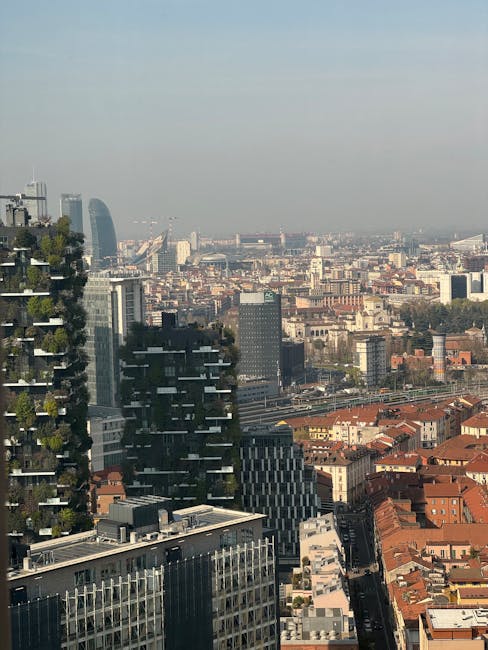
The Bosco Verticale (Via Federico Confalonieri 11, 20124 Milano) has become an icon of sustainable architecture: two residential towers clad in trees and shrubs that boost biodiversity, thermal insulation and air quality. Although it’s private housing (best viewed from Piazza Emilio Pucci), the project inspires many international proposals. Around it, the CityLife district (via Federico Scoppa area) combines residential and commercial towers, a public park and a large pedestrian zone — main addresses include CityLife Shopping District (Viale Luigi Camoens 2).
Visiting Bosco Verticale is mainly done on foot from Isola metro station (M5) or from Piazza Gae Aulenti. Contemporary projects that integrate greening, water management and microclimate are strongly supported by the municipality. CityLife also offers a large free public park open daily (hours generally 06:00–22:00) and a shopping center with stores, a cinema and restaurants (hours vary, shops often 10:00–21:00).
Practical tips: the best light for photographing Bosco Verticale is in the morning or during the golden hour at sunset; public esplanades are free to access. For lunch in CityLife, restaurant menus range from €12 to €35 depending on the venue; card payment is recommended. If you’re a professional, contact the municipal urban planning office (Comune di Milano, Piazza della Scala 2) for info on calls for projects and building rules in dense urban zones.
Click here to book your Triennale Milano ticket
Conclusion — Milan as a Global Platform for Architectural Innovation
Today Milan stands out as a platform where international architecture finds both inspiration and application. The city blends monumental heritage, modern business districts, cultural conversions and ecological experimentation. Success stories from the Duomo and Galleria Vittorio Emanuele II, the rebirth of Porta Nuova and CityLife, the conversion of factories into cultural spaces like Fondazione Prada and HangarBicocca, as well as iconic projects like Bosco Verticale, form an ecosystem where every project benefits from local visibility and synergies.
For practitioners and visitors alike, Milan offers concrete advantages: a rich cultural offering (Triennale Milano, Politecnico di Milano — Piazza Leonardo da Vinci 32), international events (Salone del Mobile, Milano Design Week), and accessibility that eases encounters between developers, architects and institutions. The key addresses provide a tangible framework for understanding Milan’s approach: Largo Isarco 2 for Fondazione Prada, Via Chiese 2 for HangarBicocca, Piazza Gae Aulenti for Porta Nuova, Via Federico Confalonieri 11 for Bosco Verticale, and Piazza del Duomo for the historic center.
Final practical tips: plan your visits by checking official opening hours (museums and foundations frequently change hours based on exhibitions), favor public transport (metro M1/M2/M3/M5, trams) and wear comfortable shoes to explore the neighborhoods. For professionals interested in proposing a project in Milan, consult the Comune di Milano (Piazza della Scala 2) about permit procedures and local incentives. And remember that Milan is a living city — projects only make sense when they engage with residents, shopkeepers and neighborhood life; this capacity for integration is what makes Milan a top destination for international architecture.