





Introduction
Milan isn’t just Italy’s capital of fashion and design — it’s a living urban laboratory where contemporary architecture reshapes the historic fabric. Walking through the city you’ll sense a constant dialogue between medieval remnants and glass towers, between small shaded squares and planted islands that look plucked from a futuristic novel. This article invites you to explore the neighborhoods where 21st‑century Milan shows itself most clearly — from the slender towers of Porta Nuova to the regenerated industrial pockets of Tortona, via the bold landscape of the Bosco Verticale and the museum staging of the Fondazione Prada.
My aim is twofold: to give you a practical, sensory route for architecture lovers, and to provide concrete details — exact addresses, opening hours, ticket prices, local tips — so every visit becomes a full experience. You’ll find viewpoint recommendations (where to direct your gaze), the best times of day and weather for photos, plus travel tips to get from one site to the next without wasting time. This is an immersive approach: I’ll describe not only façades and materials, but also atmosphere — the sound of fountains, the feel under the trees, the way light plays on a metal wall.
Milan has successfully turned former industrial zones into dynamic neighbourhoods: CityLife, Porta Nuova and Tortona are prime examples. Each place has its own signature: green roofs, pedestrian promenades, iconic towers by international architecture firms, and contemporary cultural spaces open to the public. The itinerary I propose favors walking and public transport, with bike or tram alternatives for moments when the city’s pace invites a slower rhythm.
Finally, the article includes practical reference points — prices in euros, opening hours, full addresses — so you can plan your days with no surprises. Whether you’re a photographer, an architecture student, or an inquisitive traveller, these routes will help you experience contemporary Milan from every angle: aesthetic, social and functional.

Porta Nuova and Isola: skyscrapers, hanging gardens and neighbourhood life
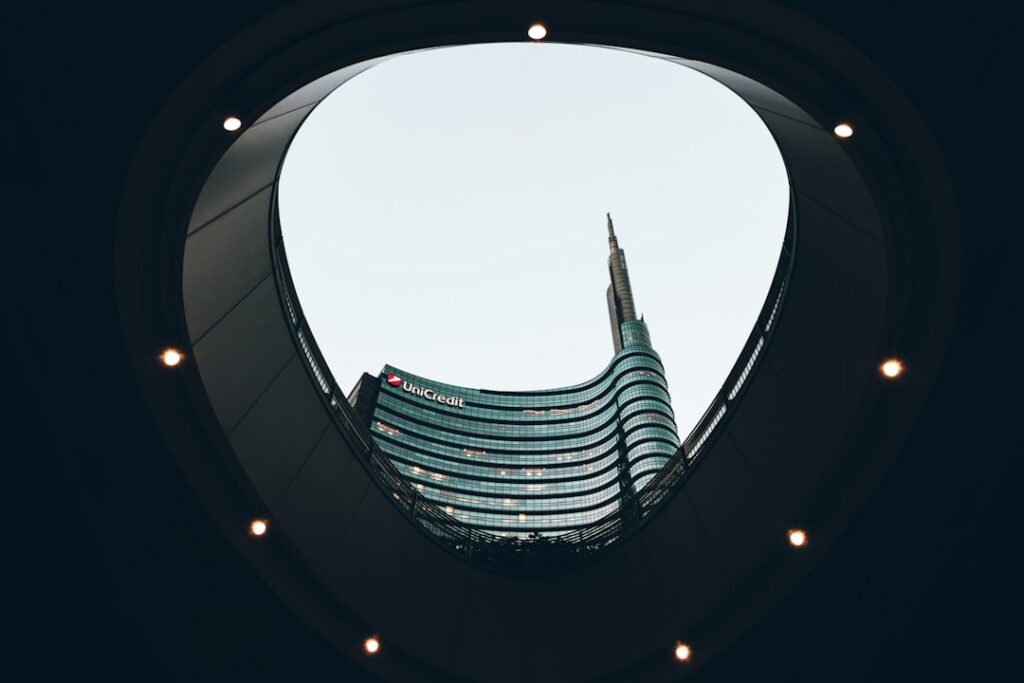
Porta Nuova is one of the standout sites in Milan’s urban rebirth. At its heart is Piazza Gae Aulenti (Piazza Gae Aulenti, 20154 Milano MI), ringed by glass towers like the UniCredit Tower and broad pedestrian promenades. The square is open 24/7 and free to enter — it’s an excellent starting point to take in modern lines, water features and evening lighting. For a sunset shot, arrive about 30 minutes before dusk to capture the golden light on the glass façades.
Just to the north, the Isola neighbourhood (around Via Paolo Sarpi / Via Borsieri) has managed to keep a village feel while welcoming contemporary buildings. Here you’ll see old workshops refurbished beside design cafés. Stroll down Via Pollaiuolo and Via Borsi to soak in local life: small shops, restaurants and unexpected street art dot the route.
At the core of Porta Nuova, the Bosco Verticale project is a strong symbol: two residential towers covered in trees and plants, imagined by Boeri Studio. Approximate address for visual reference: Via Gaetano de Castillia 11, 20124 Milano MI. Private terraces aren’t accessible without an appointment, but viewing from the street is free. The best time to appreciate it is in the morning or late afternoon, when light highlights the green volumes and creates a striking contrast with the nearby glass façades.
Practical tips: use Garibaldi FS metro station (Lines M2 and M5) for easy access. Wear comfortable shoes for the pedestrian areas and carry a windbreaker — the breeze between the towers can be noticeable, especially in winter. If you want a café with a view, a terrace café in one of the nearby shopping centres often offers an interesting vantage point (a cappuccino costs around €3.50).

CityLife: three towers, wide open spaces and contemporary design
The CityLife district is a large urban redevelopment to the west of the historic centre. The site is easily recognised by its « Tre Torri » (the three towers) that dominate the main square, Piazza Tre Torri (Piazza Tre Torri, 20145 Milano MI). Among them the Torre Allianz stands out, designed by Arata Isozaki, and the Torre PwC by Zaha Hadid. CityLife mixes residential areas, offices and a multi‑hectare linear park.
The masterplan encourages strolling: wide esplanades, bike lanes, playgrounds and temporary contemporary art installations. The CityLife Shopping District (Piazza Tre Torri) is generally open seven days a week, with shop hours often around 10:00–21:00; access to the space is free, though parking and some paid attractions depend on events. The central park is accessible day and night, and its fountains and installations are lit up after dark to create an urban ambience.
For architecture fans, a circular walk around the towers lets you examine different façade treatments, materials and urban profiles. The junction between the old fairground area and the new planning provides a revealing contrast: rails, converted warehouses and contemporary walkways.
Practical tips: reach CityLife via the Tre Torri metro station (M5). Parking can be expensive: expect about €3–4 per hour in private car parks. For a break, try the eateries in the CityLife Shopping District: a simple lunch in a brasserie or bistro will cost between €12 and €20. Don’t forget a wide‑angle lens to do justice to the volumes and perspectives.
 Click here to book your ticket for the Triennale Milano
Fondazione Prada and the Tortona district: culture, industrial rehab and creativity
The Fondazione Prada is a must for anyone wanting to understand how contemporary culture settles into renovated industrial architecture. Address: Largo Isarco 2, 20139 Milano MI. The complex includes the restored Torre and exhibition halls; the whole ensemble is a mix of raw concrete, open volumes and artistic interventions. Exhibitions rotate frequently; tickets generally cost around €15 (reduced rates available), and regular opening hours are Tuesday–Sunday 10:00–19:30 (check the official website before your visit).
Nearby, the Tortona district — centred on via Tortona and via Savona — is Milan’s creative hub, especially lively during Milan Design Week. Old factories sit alongside showrooms and architects’ studios. Via Tortona itself hosts pop‑up galleries and private exhibitions; the evening atmosphere, particularly during events, is electric.
Visiting the Fondazione Prada is also about experiencing transitions: dark exhibition rooms, bright courtyards, and radically contemporary partitions. The Bar Luce at the Fondazione, designed by Wes Anderson, is worth a stop for its ambience and as an example of interior design that talks to the surrounding architecture (a coffee costs roughly €3–5).
Practical tips: combine Fondazione Prada with a walk through the small streets of the Navigli or a detour via Romolo station (metro M2) for a direct connection. Guided tour times and temporary exhibitions can vary; book online to avoid queues and check usual closure days (often Monday). Allow at least 2 hours for a full visit to enjoy both the exhibitions and the outdoor spaces.
Click here to book your entrance ticket to Fondazione Prada

Navigli and the waterfront: the canal’s reinvention and mixed architectures
The Navigli, while best known for their bohemian vibe and aperitivi, are also an interesting example of interaction between old architecture and contemporary interventions. The area around the Canale Naviglio Grande (Navigli district, 20144 Milano MI) mixes historic bridges, pedestrian quays and partially renovated industrial buildings turned into studios and cafés.
A walk along the canal offers varied perspectives: reflections of shop signs on the water, colourful façades, inner courtyards transformed into cultural spots. Many old structures keep exposed brick elements, contrasted with modern additions like glass roofs and metal volumes. At night, the lights on the water create a very photogenic atmosphere — ideal for urban photographers.
Local practicalities: bars and restaurants in the Navigli offer aperitivi (drink with buffet) for €6–12; it’s a good way to experience the neighbourhood without spending a lot. Weekend flea markets and small antique stalls add a popular dimension. Be careful: quays can be slippery after rain and some bridges are narrow — choose shoes with good grip to move around safely.
Travel tip: reach the area via Porta Genova station (metro M2) for direct access. If you visit in the evening, stick to well‑lit routes and keep an eye on your belongings: it’s a very lively neighbourhood that also attracts large crowds.

General practical tips for visiting contemporary architecture in Milan
– Transport: the electronic « ATM Milano » card works for metro, tram and bus; buy a 24‑hour ticket (€7 approx.) if you plan multiple trips. Shared scooters and bikes are handy for short hops in Porta Nuova and CityLife.
– Best time to visit: spring (April–June) and autumn (September–October) offer the best light and pleasant temperatures. In summer expect sometimes intense heat near glass façades — favor morning visits.
– Photography: a wide‑angle lens is recommended for urban volumes; a polarising filter helps reduce reflections on glass and water. Respect private areas: many contemporary buildings are residential or office spaces — external observation is usually allowed, interior access often requires a reservation.
– Budget guide: most outdoor walks are free. Museums and foundations (Fondazione Prada, temporary exhibitions): €10–18. Cafés and meals: €3–25 depending on the type of place.
Click here to reserve your access to the Duomo terraces
Conclusion
Milan is a city in constant motion where contemporary architecture is not simply layered on top of older structures but forms a living urban conversation. By exploring Porta Nuova, CityLife, Fondazione Prada, Tortona, Isola and the banks of the Navigli, you’ll discover a variety of approaches: glass and steel towers, vertical planted forests, transformed industrial sites turned into cultural venues, and intimate convivial micro‑spaces in popular neighbourhoods. Each site offers a different lesson in how the city reinvents itself — aesthetically, environmentally and socially.
On a practical note, arm yourself with a metro map, comfortable shoes and a camera, and book paid exhibitions online when possible. The routes I suggest are modular: you can concentrate a day on Porta Nuova and CityLife, or pair Tortona and the Navigli for a more cultural, evening‑focused itinerary. And above all, leave time to linger — the best discoveries often come from an unexpected break in a café or a sidestreet detour.
Contemporary Milan is both a visual spectacle and a laboratory of urban experimentation: it speaks of sustainability (Bosco Verticale), mobility (CityLife), culture (Fondazione Prada) and social resilience (Isola, Navigli). By diving into these neighbourhoods you’ll see how architecture can transform not only spaces but ways of living in the city. Enjoy your architectural journey — and don’t forget to keep your eyes up: the next remarkable façade could surprise you around any corner.