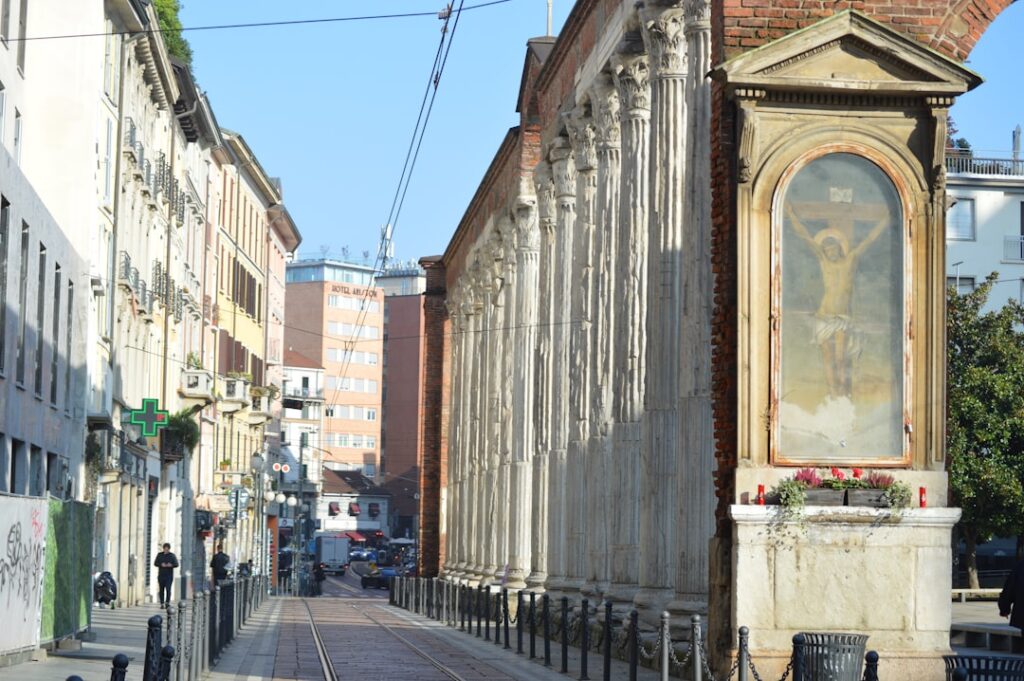






Introduction: Historic Milan — alleys and old neighborhoods
Milan is often seen as Italy’s financial and fashion capital, a hub of business, runway shows and contemporary design. Yet behind the sleek façades and luxury boutiques lies a dense web of alleys, squares and neighborhoods that tell centuries of history. Walking through Milan is like reading an urban chronicle where medieval remnants, Renaissance splendor, Napoleonic marks and industrial touches all overlap. These historic spots, sometimes discreet, sometimes grand, offer a real journey through time for curious visitors and travelers who like to take things slow.
In this article we’ll explore Milan’s old quarters — from the Duomo to the winding streets of Brera, from the arcades of the Galleria Vittorio Emanuele II to the reimagined ramparts around Castello Sforzesco, from the industrial charm of the Navigli to religious treasures like Santa Maria delle Grazie. For each place I give practical info: exact addresses, opening hours, prices in euros, immersive descriptions and local tips to make the most of your visit (best times to avoid crowds, transport, good spots to eat, photo tips, visiting rules). The aim is to help you build a tailor-made itinerary: whether you love architecture, painting, slow walks or lively aperitivo scenes, historic Milan offers a rich palette easily reachable on foot or by public transport.
Milan’s historic quarters are organised into micro-universes where every street corner can reveal a forgotten church, a courtyard decorated with frescoes, a long-standing craft workshop or a family-run trattoria. Brera’s intimacy contrasts with the solemnity of Piazza del Duomo; the Navigli quays take on an almost village air at sunset, while Castello Sforzesco stands solid opposite Parco Sempione. The old city is also home to major works: Leonardo’s Last Supper, the Duomo with its rooftop and spires, and the Pinacoteca di Brera. Knowing where to go, how to get there, how much it costs and when to go makes a dramatic difference to the experience.
Before we dive into each site, keep a few general tips in mind: buy tickets online for the Last Supper (Santa Maria delle Grazie) and the Duomo rooftop to avoid long queues; favour visits early in the morning or after 4pm for softer light and fewer people; explore side streets to find artisan workshops and cafés that don’t make it into every guidebook; and allow yourself time to wander without a strict schedule — Milan often reveals its best charms by accident.
The Duomo, Galleria Vittorio Emanuele II and the streets around Piazza del Duomo
The Duomo di Milano is the historic and symbolic heart of Milan. Located on Piazza del Duomo, it stands on the site of earlier Gothic cathedrals transformed over centuries into one of Europe’s most recognisable religious buildings. Address: Piazza del Duomo, 20122 Milano. Opening hours: the cathedral is generally open daily from 8:00 to 19:00 (times may vary for religious events); the rooftop (terrace/rooftop) typically opens around 9:00 to 19:00 (last entry varies by season). Prices: entrance to the basilica is free (donations suggested); museum and rooftop visits cost about €14–€22 depending on whether you climb stairs or take the lift (indicative prices — check online for updates). Combined Duomo + terrazze tickets allow access to the roofs to admire the forest of spires and views over the city and the Alps on clear days.

Right next to it, the Galleria Vittorio Emanuele II (Piazza del Duomo) is a 19th-century commercial atrium with a glass dome and mosaic floor. Access is free; historic shops and cafés like Camparino in Galleria (Via Silvio Pellico 2) serve classic aperitivi (price of a Spritz: €7–€12 depending on the place). Shop hours: generally 10:00–20:00, with some cafés/restaurants opening earlier and staying open late. The Galleria is a fine example of neoclassical and Art Nouveau architecture, great for photography — especially in the morning when the light filters through the glass roof.

Around Piazza del Duomo, streets like Via Torino, Via Orefici and Corso Vittorio Emanuele II are full of shops, historic signs and pedestrian alleys. For a less touristy approach, walk up Via dei Mercanti toward Piazza dei Mercanti, where medieval traces remain: this is where the communal power buildings once stood. Piazza dei Mercanti (Via dei Mercanti, 20123 Milano) is a small square that still conveys the layout of medieval Milan. It’s an excellent starting point to dive into the maze of old streets in search of decorated courtyards, arches and palazzi with discreet façades.
Practical tips: arrive early at the Duomo (or book a priority ticket) to avoid crowds and summer heat. For the rooftop, wear comfortable shoes — surfaces can be uneven. The Galleria is very busy in the afternoon and evening; for crowd-free photos try a slot before 10:00. If you want a guided tour, several local agencies offer combined Duomo + rooftops + Galleria tours (group guided prices around €25–€40 per person depending on inclusions). Finally, for a sweet break, try buttery chocolate bread (panettone in season) at a historic pastry shop near the Duomo.
 Click here to book your cathedral and rooftop ticket
Click here to book your Skywalk ticket for the Galleria
Brera: art studios, the Pinacoteca di Brera and secret courtyards
The Brera district is often described as Milan’s bohemian, artistic heart. It’s a network of cobbled lanes, small shaded squares, artisan studios and family-run trattorie. At the centre of the neighbourhood is the Pinacoteca di Brera, one of Italy’s most important art galleries. Address: Pinacoteca di Brera, Via Brera 28, 20121 Milano. Opening hours: generally 8:30–19:15 (closed Monday). Prices: standard ticket around €12 (reduced €6–€8 for some categories); temporary exhibitions extra. The Pinacoteca houses masterpieces by Raphael, Piero della Francesca, Caravaggio and Titian, displayed in the grand rooms of a former palace with a timeless atmosphere.
Stroll down Via Brera and Via Fiori Chiari, where galleries, art bookshops and antique dealers cluster. Practically speaking, the area is served by Lanza metro station (M2) and several tram lines, including numbers 2 and 14 which cross characteristic streets. The neighbourhood’s small courtyards (cortili) are worth exploring: some are open to the public and reveal old doors, hidden gardens and façades decorated with wrought-iron balconies.

Brera also has a strong culinary tradition: many trattorie serve classic Lombard dishes like risotto alla milanese (saffron rice) and ossobuco. For an authentic lunch try Trattoria Torre di Pisa (Via Fiori Chiari 21) or Ristorante Nabucco (Via Fiori Chiari 10) — main courses between €12 and €30. In the evening, aperitivo in Brera bars is a ritual: ordering a cocktail (€8–€15) often gives you access to a varied buffet.

Practical tips: buy your Pinacoteca tickets online for high-demand exhibitions. If you love photography, morning light in Brera’s alleys is soft and perfect for capturing textures and frescoes. Art studios may accept visits by appointment; don’t hesitate to knock on the doors of small galleries — owners are often happy to explain their work. Finally, if you want to avoid peak times, plan Brera for late afternoon to enjoy an aperitivo on a terrace and a more relaxed atmosphere.
Click here to buy your ticket for the Pinacoteca di Brera
Castello Sforzesco and Parco Sempione: ramparts, museums and walks
Castello Sforzesco is an imposing castle-museum that testifies to Milan’s many transformations. Address: Castello Sforzesco, Piazza Castello, 20121 Milano. The castle dates back to the 15th century (Sforza family) and today houses several museums and collections (Ancient Art Museum, Museum of Musical Instruments, Egyptian Museum, and Michelangelo’s famous Pietà Rondanini). Opening hours: the museum complex is generally open Tuesday to Sunday from 9:00 to 17:30 (hours vary by section). Park entry: free. Museum prices: variable — often €5–€10 per museum; combined ticket for Castello museums about €10–€15 (indicative prices). The castle is surrounded by the large Parco Sempione, ideal for a green break in the heart of the city.
Parco Sempione (Piazza Sempione, 20154 Milano) is a green lung adjacent to the castle: shaded paths, small ponds, the Arco della Pace (Arch of Peace) and Torre Branca (observation tower, Viale Emilio Alemagna 5). Arco della Pace sits at the park’s northern edge, facing Porta Sempione and forming a beautiful urban vista. Torre Branca hours: generally 10:00–19:00, price around €5–€7 to climb and enjoy panoramic views. The park is very busy late afternoon when locals come to jog or picnic.
The Castello offers temporary exhibitions and themed guided tours (archaeology, design, military history). History enthusiasts might combine a castle visit with a walk along former city walls and historic gates like Porta Ticinese and Porta Nuova (explore on foot or by shared bike). If you plan to see Michelangelo’s Pietà Rondanini at the Castello, note the room is small and often limited in visitor numbers — book in advance if possible.

Practical tips: Castello and Parco Sempione are perfect for families — bring a blanket for a picnic and enjoy the playgrounds. If you love architecture, climb Torre Branca for 360° urban shots (take a jacket — the top can be windy). English guided tours run at regular times; prices around €10–€20 depending on duration. To reach the site from the Duomo: take the metro to Cadorna (MM1/MM2) or tram 1/12 depending on your starting point.
Click here to book your ticket for Sforza Castle
Click here to climb Torre Branca for panoramic views
Navigli: canals, charming lanes and historic nightlife
The Navigli district is one of Milan’s most picturesque areas, defined by canals (navigli) dug in medieval times and historically used to transport goods — including the marble for the Duomo. The two main canals are Naviglio Grande and Naviglio Pavese. Central address: Naviglio Grande, 20144 Milano (sections along Alzaia Naviglio Grande). The area is famous for terrace cafés, monthly antiques markets (Sunday, dates vary) and aperitivo restaurants.

Walk along the Alzaia (canal bank) to find artisan workshops, contemporary art galleries and wine bars. The bridges, colourful houses and reflections on the water create an almost provincial atmosphere in the middle of the metropolis. For a different experience, book a mini-cruise on Naviglio Grande: short tours of about 30–50 minutes, costing €10–€20 depending on season and type of tour. Summer evenings bring the quays alive for aperitivo; expect drink prices of €6–€12 and often a buffet included depending on the bar.
The Navigli markets (notably the Mercatone dell’Antiquariato every last Sunday of the month along Naviglio Grande) are a treasure trove for bargain hunters. If you visit on a Sunday leave room in your luggage: you’ll find vintage items, rare books and mid-century design pieces. For dining, try Osteria del Binari (Via Tortona 1), famous for traditional Milanese dishes (main courses €12–€30). Via Tortona nearby is also a former industrial area transformed into a creative hub with galleries and showrooms.
Practical tips: at night favour pedestrian sections to avoid traffic; parking is scarce so use public transport (trams 3, 9 and 10 serve the area). If you want a boat ride, book in advance in summer. For photos, choose the golden hour (sunset) — the water reflections are spectacular. Finally, watch your receipts: at aperitivo check whether the buffet is included with the drink to avoid surprises.
Santa Maria delle Grazie and The Last Supper (Il Cenacolo Vinciano): masterpiece and essential booking
Santa Maria delle Grazie is a major religious building in Milan, famous for housing Leonardo da Vinci’s « Il Cenacolo » (The Last Supper). Address: Piazza di Santa Maria delle Grazie, 2, 20123 Milano. The church and refectory owe their fame to Leonardo’s fresco, and entrance is strictly controlled to preserve the work. Opening hours: church generally open 7:00–12:30 and 15:00–19:00 (hours vary); Last Supper visits follow precise time slots, often between 8:15 and 19:15 from Tuesday to Sunday (closed Monday). Prices: standard ticket for The Last Supper around €15 (online booking often mandatory); reduced rates for youth and seniors if available.

Online booking is almost essential: places are limited (15-minute visits per group) and often sell out weeks in advance, especially in high season. Tickets are dated and timed; arriving early doesn’t guarantee entry without a printed or digital confirmation. To fully appreciate the work, consider a guided tour in English or French — these tours explain the historical context, Leonardo’s painting techniques and successive restorations (guided tour prices about €25–€40 depending on duration and format).

The neighbourhood around Santa Maria delle Grazie is full of cafés and small trattorie where you can enjoy an espresso after your visit. How to get there: Cadorna FN station (MM1/MM2) or by bus; from the city centre (Duomo) allow 15–20 minutes by metro. Important tip: keep your printed ticket or the QR code on your phone, arrive at least 15 minutes before your slot and avoid large bags (security gates at the entrance). Also note other Leonardo-related sites in Milan (such as the Museo Nazionale della Scienza e della Tecnologia Leonardo da Vinci, via San Vittore 21) are worth visiting if you want to dig deeper.
Click here to book entry to the Leonardo da Vinci museum
Practical tips for visiting Milan’s alleys and old neighborhoods
Milan is best discovered on foot, but smart use of public transport makes exploration more efficient. The metro network (ATM) has three main lines (M1 – red, M2 – green, M3 – yellow); a single ticket costs about €2.20 (valid 90 minutes, check current fares). For short stays, MilanoCard or daily tourist passes can be good value if you plan multiple trips and museum visits (prices vary by duration). Historic trams (notably lines 1 and 2) offer a picturesque way to cross the city.
A few local recommendations: wear sturdy, comfortable shoes for cobbled alleys; carry a small water bottle (drinking fountains and public taps available); respect mass times in churches — some areas may be closed or have limited access. If you plan to buy artisan souvenirs, look for workshops on Via Torino and independent shops in Brera for authentic pieces. For money and payments, cards are widely accepted but keep some cash for markets and small cafés.
Safety and behaviour: Milan is generally safe, but as in any big city watch out for pickpockets in very touristy areas (Duomo, Galleria, Navigli at night). Avoid overly persistent street offers and keep important documents in an inner pocket. Tipping is not mandatory but appreciated — 5–10% in restaurants if service is not included. Finally, check Italian public holidays (Christmas, Easter, April 25, May 1) — some museums may close or change hours.
Conclusion: Old Milan, a city to (re)discover step by step
Historic Milan is not a frozen museum: it’s a living city where every alley, square and canal carries traces of a time and its people. The Duomo dominates the vistas, but it’s in neighbourhoods like Brera, around Castello Sforzesco or along the Navigli that the city’s true intimacy is read. Milan’s richness lies in its ability to combine heritage with everyday life: world-famous museums, renowned frescoes, small Romanesque churches and artisan workshops coexist and tell each other’s stories.
For the traveller, that means leaving time to wander, stop in a courtyard, listen to café conversations, soak up the aromas of a trattoria and follow the discontinuous thread of a fresco discovered around a corner. The practical information in this article — exact addresses, indicative opening hours, prices in euros and local tips — is a tool to plan, but Milan’s magic reveals itself mostly to those who accept getting a little lost. Book the must-sees in advance (The Last Supper, Duomo Rooftop, major exhibitions) to guarantee access; still, keep a morning or evening free for the unexpected and discovery.
All in all, historic Milan rewards curiosity. Whether you’re an art lover, photographer, foodie or simply a traveller seeking urban authenticity, you’ll find places that speak of history and humanity. Take your time, let the city surprise you and come back with images, memories and perhaps the desire to explore even further — because Milan is read across miles of alleys, each one with its own story to tell.