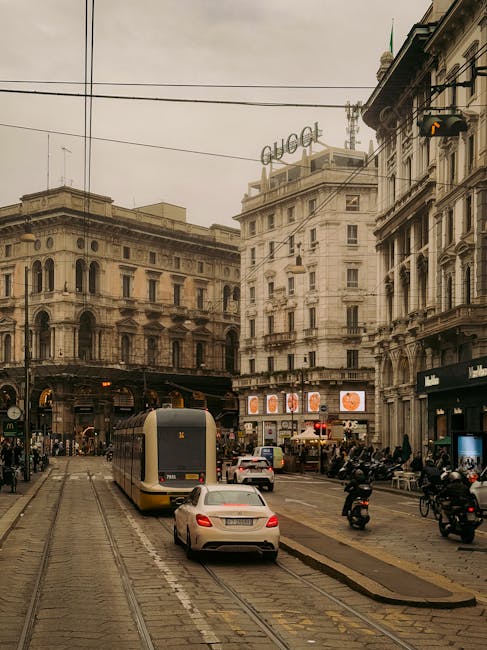






Introduction — Why combine biking and trams to explore Milan
Milan isn’t just the capital of fashion and design: it’s a city that lends itself perfectly to slow, flexible, multimodal exploration. Pairing a bike with the tram gives you the best of both worlds: the freedom, gentle pace and local immersion of cycling, together with the reliability, reach and historic charm of Milan’s trams. This combo lets you cover longer distances without tiring yourself out, stop right in front of major sights and ride historic tram lines that tell the city’s urban and industrial story.
Starting by bike lets you escape the busiest tourist trails: ride along Parco Sempione at dawn, follow the Naviglio Grande at dusk or micro-explore the Art Nouveau streets around Porta Venezia. The tram, meanwhile, is invaluable for crossing major arteries like Corso Buenos Aires, reaching Stazione Centrale quickly or taking Line 1 between Piazza Castello and the Duomo — all while offering unique urban perspectives and a typically Milanese experience. For cyclists, parking infrastructure and bike lanes have improved in recent years, and many bike-share stations make it easy to pick up or drop off a bike when you want to switch modes.
Beyond practicality, the bike + tram itinerary lets you vary the mood: Gothic architecture and the solemn Piazza del Duomo, green avenues of Parco Sempione and contemporary art at the Triennale, the neighborhood vibe and artisan cafés of Brera, then the romantic, lively canals of the Navigli at night. You can take a tram to a central stop, then set off by bike for more focused visits — for example, ride Line 12 to the Darsena, then hop on your bike to head up toward Castello Sforzesco.
This guide offers practical, detailed routes including exact addresses, opening hours, approximate prices in euros and local tips to make the most of combining bike and tram in Milan. Whether you have half a day or several days, you’ll find loops designed for safety, comfort and immersion. We’ll also show you where to rent a bike, how to buy and validate an ATM tram ticket, and which rush hours to avoid. Plus, there are foodie stops and charging points to recharge your batteries (and your e-bike if needed).
Ready to hop on your bike, board a historic tram and see Milan from a different angle? Follow these routes crafted to maximize enjoyment, photo opportunities and efficiency while keeping pace with the city. Bring a sturdy lock, a lightweight rain jacket depending on the season and a charged phone for maps and ticket validation. Happy urban exploring!

Route 1 — Duomo, Galleria Vittorio Emanuele II and Parco Sempione loop (about 8–10 km)
Start your day by bike at Piazza del Duomo (Piazza del Duomo, 20122 Milano MI). The Duomo di Milano and its Gothic cathedral are unmissable: visit the interior and climb the terraces for panoramic views. Address: Piazza del Duomo, 20122 Milano. Opening hours: Cathedral 8:00–19:00 (basilica and cathedral schedules can vary with ceremonies). Approximate price: cathedral entry from €3–7 (terrace access extra, roughly €10–15 depending on lift or stairs). Check the official site for up-to-date hours and reservations.
 Click here to book your Duomo cathedral and terrace ticket

After the visit, cross the Galleria Vittorio Emanuele II (Piazza del Duomo, 20123 Milano) to admire the mosaics and historic storefronts. Hours: open daily, shops generally 10:00–20:00 but cafés and restaurants may open earlier or stay open later. Free to wander; purchases depend on the shop. Exact address: Galleria Vittorio Emanuele II, Piazza del Duomo, 20123 Milano.
From the Galleria, either take the tram or hop on your bike and head along Corso Sempione to Parco Sempione (Piazza Sempione, 20154 Milano). If you cycle, the full loop goes via Via Dante then Piazza Castello, past Castello Sforzesco (Piazza Castello, 20121 Milano). Castello Sforzesco — Hours: museums 9:00–17:30 (some museums closed on Mondays). Price: museums included in a combined ticket from roughly €5–10 depending on exhibitions.
Parco Sempione is perfect for a break: trees, lawns and the Triennale (Viale Emilio Alemagna, 6, 20121 Milano) where contemporary art and Italian design take center stage. Triennale hours: 11:00–20:00 (closed Monday), prices vary €10–15. Address: Viale Emilio Alemagna, 6, 20121 Milano.
Click here to book your ticket for Sforza Castle
Click here to buy your ticket for the Triennale di Milano

Practical tips: choose biking in the morning to avoid crowds and summer heat. Park at official racks near Piazza Castello or use a BikeMi station (check via the ATM app) to drop off the bike. If you ride the tram, buy an ATM single ticket at the fixed fare of €2.20 (valid 90 minutes) or opt for the day pass at €7.00 if you plan multiple trips. Trams run frequently around the Duomo and Piazza Castello (lines 1, 2 and 4 depending on route) and generally operate from 5:30 until midnight, with night variations.

Route 2 — Navigli, Darsena and Brera combining tram and bike (about 10–14 km)
This loop is ideal for late afternoon and evening. Recommended start: Stazione di Milano Centrale (Piazza Duca d’Aosta, 1, 20124 Milano). From Centrale, take the tram (e.g. line 9 or 10 depending on your stop) or cycle southwest toward the Darsena and the Naviglio Grande. The Darsena (Piazza XXIV Maggio, 20123 Milano) is the renovated historic dock, lively in the evening. The walk along the Naviglio Grande is lined with bars, restaurants and artisan shops.
Naviglio Grande address: Lungotevere, Navigli area, 20123 Milano. Atmosphere: aperitivo and live music mainly from 18:00 to 23:30. Prices: aperitivo from €8–12 depending on the venue; full menus €15–30. In the evening, bike parking can be trickier — use solid locks and secure the frame to a fixed point.
From the Navigli, head northeast toward Brera (Via Brera, 20121 Milano). Brera is an artistic, pedestrian-friendly neighborhood, perfect for a coffee stop. Pinacoteca di Brera — Address: Via Brera, 28, 20121 Milano. Hours: 8:30–19:15 (closed Monday). Price: around €10–15 depending on temporary exhibitions. Brera also offers cobbled lanes and artisan workshops to discover by bike — watch out for cobblestones, slow down and sometimes dismount to protect your wheels.
Click here to buy your Pinacoteca di Brera ticket

Practical tips: the Navigli area gets very busy at night; aim to arrive by tram (Darsena tram stop) then rent a bike from a station if needed to move along the canals. Trams serving the Darsena are active and make it easy to head back to Centrale or the Duomo. Carry a few euros in cash for small purchases at artisan stalls and for tips if you enjoyed the service.

Route 3 — From Stazione Centrale to Porta Garibaldi and the new Porta Nuova district (about 6–9 km)
Start at Stazione Centrale (Piazza Duca d’Aosta, 1, 20124 Milano), a monumental hub useful for long-distance connections. Hours: the station is open 24/7; shops 6:00–22:00. From the station, a short bike ride or tram (lines 5, 7) will take you to Piazza Gae Aulenti, the heart of Porter Nuova with the Bosco Verticale towers. Piazza Gae Aulenti — Address: Piazza Gae Aulenti, 20154 Milano. Atmosphere: contemporary architecture, restaurants and photo spots. Free to wander.
The Bosco Verticale (Via Federico Confalonieri, 11, 20124 Milano) is a striking example of green architecture. Nearby, the area offers dedicated bike lanes and wide pedestrian paths. You can continue to Fondazione Feltrinelli (Via Pasubio, 5, 20154 Milano) and Parco Biblioteca degli Alberi (Via de Castillia, 9, 20124 Milano) — this modern park is perfect for a green break. Parco Biblioteca degli Alberi hours: 6:00–22:00 (free entry).
Practical tips: bike lanes here are well-marked and often segregated from traffic, great for beginners. If you use an e-bike, check the battery before you set off — public charging stations are limited. For tram trips to Porta Garibaldi or Centrale, the single ATM ticket (€2.20) is still valid for 90 minutes; always keep a validated ticket — inspectors are frequent and fines can reach €100 or more for non-compliance.

Route 4 — Practical tips, safety and useful info for combining bike and tram
Before you leave, prioritize safety: helmet (strongly recommended), reflective vest at night, front and rear lights. Milan’s streets include busy sections and pedestrian zones; obey signage. Bike lanes are shown in blue on city maps and in mapping apps (Google Maps, Komoot, Citymapper). In rain, many cyclists use lightweight ponchos or waterproof windbreakers; avoid wet cobblestones, which get slippery.

Bike rental: you can use BikeMi stations (the city’s bike-share) spread throughout Milan — check the ATM Milano app for station locations. BikeMi rates vary: daily or duration-based subscriptions (a few euros for a half day), but extended use is charged extra. There are also independent renters like “Milano Rent a Bike” and local shops around Navigli and Brera offering e-bikes for about €25–40 per day depending on the model. Always inspect the bike before you head off and ask for a lock if one isn’t provided.
Tram tickets and passes: single ATM ticket €2.20 (valid 90 minutes), 24-hour pass €7.00, 48-hour pass around €12.00 — fares are subject to change; buy at ticket machines, tabacchi or via the ATM app. Always validate your ticket before boarding the tram (use the yellow machines) — inspectors check often and penalties are steep if you’re caught without a validated ticket.
Bike parking: use official racks and designated bike parking areas; avoid “no bike” signs and don’t block shop entrances. If you leave a bike overnight, lock it to a solid fixed point and, if possible, choose a well-lit, busy area. In case of theft, report it immediately to the local police station (commissariato di polizia) and have the bike’s serial numbers and photos ready to speed up insurance claims.

Finally, respect local rhythms: aperitivo hours are lively around 18:00–22:00, and neighborhoods like Navigli and Brera bustle then. For a quieter, more photographic experience, plan visits early in the morning (6:30–9:30) or after 20:30 for night light. With these tips, you’ll be ready to enjoy Milan by mixing bike and tram efficiently, safely and enjoyably.

Useful resources
- Duomo di Milano — Piazza del Duomo, 20122 Milano, official site for hours and tickets.
- Castello Sforzesco — Piazza Castello, 20121 Milano, museums 9:00–17:30 (check Monday closures).
- Pinacoteca di Brera — Via Brera, 28, 20121 Milano, hours 8:30–19:15, ticket ~€10–15.
- Stazione Centrale — Piazza Duca d’Aosta, 1, 20124 Milano, open 24/7.
- ATM Milano — tram tickets €2.20 / 24h pass ≈ €7.00 (indicative fares).
Conclusion — Make the most of Milan by bike + tram
Combining bike and tram to explore Milan is a winning strategy: it gives you the agility of a bike for lanes, parks and canals while using the tram network to cross the city quickly and conserve energy. The routes here cover the essentials — Duomo, Galleria Vittorio Emanuele II, Castello Sforzesco, Parco Sempione, Navigli, Brera, Porta Nuova — but Milan’s true charm emerges when you take time for a coffee on a small street, an aperitivo by a canal or a detour to an artisan’s workshop. The practical details provided (exact addresses, typical hours, approximate euro prices) help you plan — remember that schedules and rates can change, so always check official sites before you go.
On a practical level, invest in a solid lock, pack weather-appropriate clothing and use the ATM app to locate BikeMi stations, buy tickets and find tram stops. If you’re in a group, consider e-bikes to cover more ground without tiring. Finally, follow local traffic rules, lock your bike at designated spots and stay alert in crowded evening areas.
Beyond logistics, this way of exploring transforms your experience: in a few kilometers you can go from panoramic views on the Duomo terraces to the conviviality of the canals, while feeling the city’s layers of history and modern life. Milan is compact but rich, and alternating between bike and tram lets you savor each layer at your own pace. So plan your route, book or rent a bike, validate your tram ticket and let Milan’s mellow side lead the way — the city is waiting for your pedals and spontaneous stops to reveal its best faces.